现代菜单数据结构技术解析:从比萨菜单看电商系统底层架构
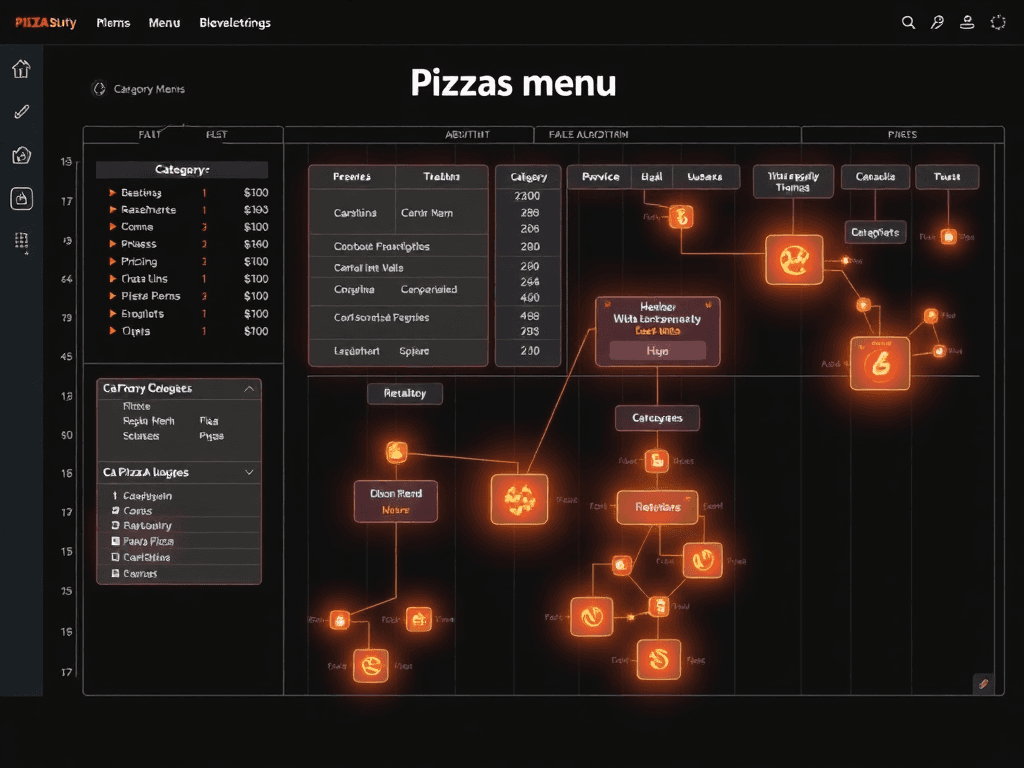
Introduction
In today's digital commerce landscape, the presentation of product data—even for something as traditional as a pizza menu—requires sophisticated technical implementation. What appears as a simple list to the end-user often represents a complex data structure backend, complete with categorization, pricing logic, and display rules. This post will deconstruct a sample menu interface to explore the underlying data models, presentation logic, and user experience considerations that power modern e-commerce systems.
在当今的数字商务领域,产品数据的呈现——即使是像比萨菜单这样传统的内容——也需要复杂的技术实现。对于最终用户来说看似简单的列表,其后台往往代表着复杂的数据结构,包含分类、定价逻辑和显示规则。本文将解构一个示例菜单界面,探讨支撑现代电子商务系统的底层数据模型、呈现逻辑和用户体验考量。
Key Concepts in Menu Data Modeling
1. Hierarchical Categorization
The menu is organized into primary categories ("Les pizzas", "Les pizzas à la crème"), which contain individual product items. This suggests a parent-child relationship in the data model, likely implemented as a nested object, a relational database with foreign keys, or a NoSQL document with sub-collections. Proper categorization is crucial for both user navigation and backend inventory management.
菜单被组织为主要类别("Les pizzas", "Les pizzas à la crème"),其中包含单个产品项。这表明数据模型中存在父子关系,可能实现为嵌套对象、带有外键的关系型数据库或带有子集合的NoSQL文档。正确的分类对于用户导航和后台库存管理都至关重要。
2. Pricing Schema and State Management
Each item displays a "Prix habituel" (regular price) and a "Prix soldé" (sale price). The technical implementation must handle:
- Price Storage: Storing base prices, possibly in a minor currency unit (e.g., cents).
- Sale Logic: Applying conditional discount rules. In this example, the sale price equals the regular price, indicating either a "default" state or a rule where the sale hasn't been activated.
- Display Logic: Deciding which price to show prominently, often involving client-side or server-side conditional rendering.
每个项目都显示"Prix habituel"(常规价格)和"Prix soldé"(促销价)。技术实现必须处理:
- 价格存储: 存储基础价格,可能以最小货币单位(例如,分)存储。
- 促销逻辑: 应用条件折扣规则。在此示例中,促销价等于常规价格,表明处于"默认"状态或促销尚未激活的规则。
- 显示逻辑: 决定突出显示哪个价格,通常涉及客户端或服务器的条件渲染。
3. Static vs. Dynamic Content
The menu items (names, categories) are relatively static, while prices and promotional states are more dynamic. This dichotomy influences technology choices: static content can be cached aggressively or even baked into the build, while dynamic data requires real-time fetching or server-side rendering (SSR) with hydration.
菜单项(名称、类别)相对静态,而价格和促销状态则更具动态性。这种差异影响了技术选择:静态内容可以被积极缓存,甚至直接构建到发布版本中;而动态数据则需要实时获取或使用水合作用的服务器端渲染(SSR)。
Main Analysis: Deconstructing the Data Structure
Based on the provided content, we can infer a likely structured data model. The raw HTML/UI components map to a logical schema that an application would use.
Inferred JSON Data Model
A backend API might serve data resembling the following structure:
{
  "categories": [
    {
      "id": "classic_pizzas",
      "name": { "fr": "Les pizzas" },
      "items": [
        {
          "id": "venezia",
          "name": { "fr": "Venezia" },
          "regularPrice": 1300, // Stored in centimes (CHF 13.00)
          "salePrice": 1300,
          "currency": "CHF",
          "priceUnit": "par",
          "isOnSale": false // Derived from price comparison
        },
        {
          "id": "margherita",
          "name": { "fr": "Margherita" },
          "regularPrice": 1000,
          "salePrice": 1000,
          "currency": "CHF",
          "priceUnit": "par",
          "isOnSale": false
        }
        // ... more items
      ]
    },
    {
      "id": "cream_pizzas",
      "name": { "fr": "Les pizzas à la crème" },
      "items": [
        {
          "id": "carbonara",
          "name": { "fr": "Carbonara" },
          "regularPrice": 1900,
          "salePrice": 1900,
          "currency": "CHF",
          "priceUnit": "par",
          "isOnSale": false
        }
        // ... more items
      ]
    }
  ]
}
根据提供的内容,我们可以推断出一个可能的结构化数据模型。原始的HTML/UI组件映射到应用程序将使用的逻辑模式。
推断的JSON数据模型
后端API可能提供类似于以下结构的数据:
(代码同上)
Presentation Layer Logic
The frontend component's responsibility is to consume this data model and render it appropriately. Key logic includes:
- Price Formatting: Converting the integer value (e.g.,
1900) into a localized display string ("CHF 19.00"). This requires a formatting function that respects the currency and locale. - Sale Indicator: A component might check if
item.salePrice < item.regularPrice. If true, it would visually highlight the sale price and potentially strike through the regular price. In our current dataset, this condition is false, so both labels show the same value. - Iterative Rendering: The UI is built by mapping over the
categoriesarray, rendering a category header, then mapping over eachitemsarray within it to render product cards.
前端组件的职责是使用此数据模型并适当地渲染它。关键逻辑包括:
- 价格格式化: 将整数值(例如,
1900)转换为本地化的显示字符串("CHF 19.00")。这需要一个尊重货币和区域设置的格式化函数。- 促销指示器: 组件可能会检查
item.salePrice < item.regularPrice是否为真。如果为真,它将视觉上突出显示促销价,并可能给常规价格加上删除线。在我们当前的数据集中,此条件为假,因此两个标签显示相同的值。- 迭代渲染: UI是通过遍历
categories数组、渲染类别标题,然后遍历其中的每个items数组来渲染产品卡片而构建的。
User Experience Considerations
The initial prompt, "Tu ne sais pas quoi choisir ? Utilise notre outil magique pour trouver ta pizza idéale" (Unsure what to choose? Use our magic tool to find your ideal pizza), hints at a higher-order feature: a recommendation or filtering system. Technically, this could involve:
- A Rule Engine: Tagging pizzas with attributes (spicy, vegetarian, creamy) and filtering based on user input.
- A Quiz Flow: A multi-step form that stores user preferences in state and scores each menu item against them.
- Performance: Implementing such a feature requires efficient filtering algorithms on the frontend or indexed queries on the backend to ensure responsiveness.
初始提示"Tu ne sais pas quoi choisir ? Utilise notre outil magique pour trouver ta pizza idéale"(不知道选什么?使用我们的神奇工具找到您的理想比萨)暗示了一个更高阶的功能:推荐或过滤系统。从技术上讲,这可能涉及:
- 规则引擎: 用属性(辣味、素食、奶油味)标记比萨,并根据用户输入进行过滤。
- 问答流程: 一个多步骤表单,将用户偏好存储在状态中,并根据这些偏好为每个菜单项评分。
- 性能: 实现此类功能需要在前端使用高效的过滤算法或在后端使用索引查询,以确保响应速度。
Conclusion and Best Practices
Building a menu system, while seemingly straightforward, touches upon core web development concepts: data modeling, state management, and component architecture. The example provided, though static, outlines the skeleton of a robust system. For production environments, developers should consider extending this model with inventory status, real-time price updates, personalized pricing, and integration with a shopping cart microservice. The key is to maintain a clean separation between the raw data, the business logic that processes it, and the presentation components that render it, ensuring the system remains scalable and maintainable.
构建菜单系统,虽然看似简单,却触及了Web开发的核心概念:数据建模、状态管理和组件架构。提供的示例虽然是静态的,但勾勒出了一个健壮系统的骨架。对于生产环境,开发人员应考虑扩展此模型,加入库存状态、实时价格更新、个性化定价以及与购物车微服务的集成。关键在于保持原始数据、处理数据的业务逻辑和呈现数据的展示组件之间的清晰分离,以确保系统具有可扩展性和可维护性。
版权与免责声明:本文仅用于信息分享与交流,不构成任何形式的法律、投资、医疗或其他专业建议,也不构成对任何结果的承诺或保证。
文中提及的商标、品牌、Logo、产品名称及相关图片/素材,其权利归各自合法权利人所有。本站内容可能基于公开资料整理,亦可能使用 AI 辅助生成或润色;我们尽力确保准确与合规,但不保证完整性、时效性与适用性,请读者自行甄别并以官方信息为准。
若本文内容或素材涉嫌侵权、隐私不当或存在错误,请相关权利人/当事人联系本站,我们将及时核实并采取删除、修正或下架等处理措施。 也请勿在评论或联系信息中提交身份证号、手机号、住址等个人敏感信息。