生成对抗网络:AI博弈论驱动的深度学习革命
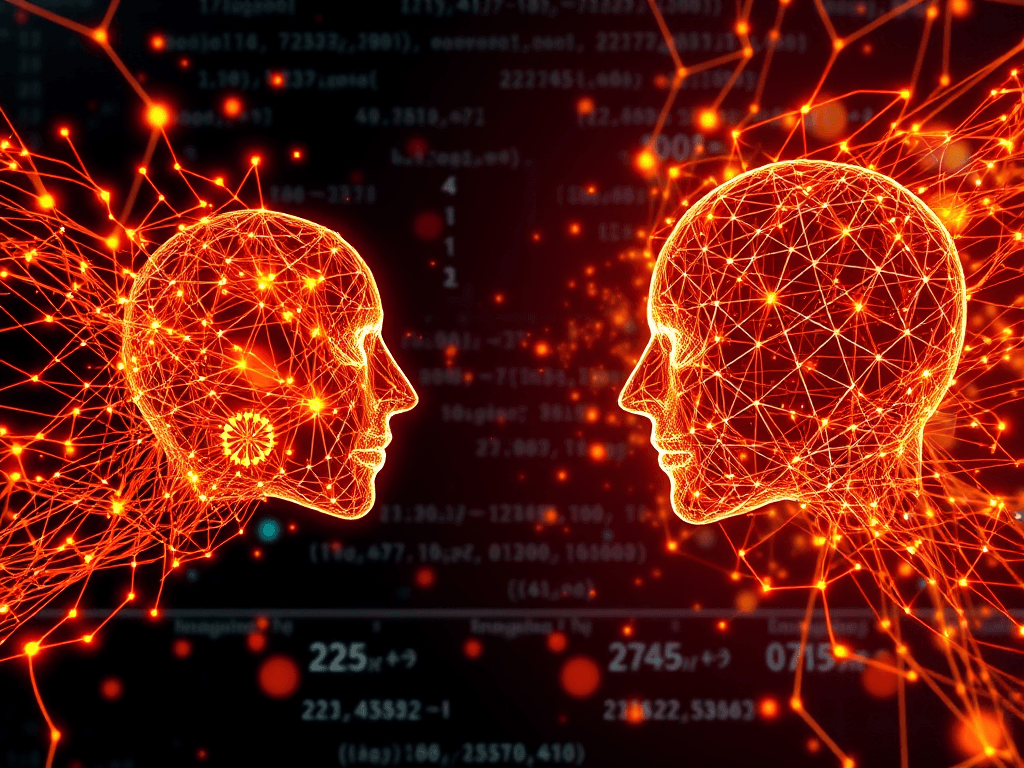
Generative Adversarial Networks (GANs) apply game theory to deep learning through competing generator and discriminator networks that produce realistic synthetic data while addressing traditional ML limitations like data scarcity and feature engineering requirements. (生成对抗网络(GANs)通过竞争的生成器和判别器网络将博弈论应用于深度学习,产生逼真的合成数据,同时解决传统机器学习中的数据稀缺和特征工程需求等限制。)
Executive Summary (执行摘要)
Generative Adversarial Networks (GANs) represent a groundbreaking application of game theory principles to deep learning, where two neural networks—a generator and a discriminator—compete in a zero-sum game to produce increasingly realistic synthetic data. This approach addresses fundamental limitations in traditional machine learning, particularly the need for massive labeled datasets and the challenges of feature engineering.
生成对抗网络(GANs)代表了博弈论原理在深度学习中的突破性应用,其中两个神经网络——生成器和判别器——在零和博弈中竞争,以产生越来越逼真的合成数据。这种方法解决了传统机器学习中的基本限制,特别是对大量标记数据的需求以及特征工程传统机器学习中手动转换输入数据的过程,旨在使数据模式更易于算法识别和处理,通常需要领域专业知识。的挑战。
From Traditional ML to Deep Learning (从传统机器学习到深度学习)
Traditional machine learning approaches rely heavily on feature engineering—the manual transformation of input data to make patterns linearly separable. For example, when predicting housing prices based on lot size, data scientists might apply logarithmic transformations to create a linear relationship between variables.
传统机器学习方法严重依赖特征工程传统机器学习中手动转换输入数据的过程,旨在使数据模式更易于算法识别和处理,通常需要领域专业知识。——手动转换输入数据以使模式线性可分。例如,当根据地块大小预测房价时,数据科学家可能会应用对数变换来创建变量之间的线性关系。
Deep learning automates this feature engineering process through multiple transformation layers. According to industry reports, deep neural networks can learn hierarchical representations of data, with lower layers detecting simple patterns (like edges in images) and higher layers combining these into complex concepts (like clothing features).
深度学习通过多个转换层自动化了这一特征工程传统机器学习中手动转换输入数据的过程,旨在使数据模式更易于算法识别和处理,通常需要领域专业知识。过程。根据行业报告,深度神经网络可以学习数据的层次表示,较低层检测简单模式(如图像中的边缘),较高层将这些模式组合成复杂概念(如服装特征)。
The Data Challenge (数据挑战)
Deep learning's impressive results come with a significant requirement: massive amounts of labeled training data. When sufficient data isn't available, practitioners have traditionally turned to techniques like transfer learning, where a model pre-trained on a large dataset is fine-tuned for a specific task.
深度学习的显著成果伴随着一个重要要求:大量标记训练数据。当没有足够的数据时,从业者传统上转向迁移学习机器学习技术,将在一个任务上训练的模型知识迁移到相关任务上,通常通过微调预训练模型实现,适用于数据稀缺场景。等技术,即在大型数据集上预训练的模型针对特定任务进行微调。
However, transfer learning often leads to overfitting—where models perform well on training data but poorly on new, unseen data. This limitation prompted researchers to explore more innovative solutions for data-scarce scenarios.
然而,迁移学习机器学习技术,将在一个任务上训练的模型知识迁移到相关任务上,通常通过微调预训练模型实现,适用于数据稀缺场景。通常会导致过拟合——模型在训练数据上表现良好,但在新的、未见过的数据上表现不佳。这一限制促使研究人员探索数据稀缺场景下更创新的解决方案。
The GAN Innovation: AI Game Theory in Action (GAN创新:AI博弈论实践)
The breakthrough came in 2014 when Ian Goodfellow introduced Generative Adversarial Networks (GANs), applying game theory principles to deep learning. The GAN framework consists of two competing neural networks:
突破发生在2014年,当时Ian Goodfellow引入了生成对抗网络(GANs),将博弈论原理应用于深度学习。GAN框架由两个竞争的神经网络组成:
- Generator (生成器): Creates synthetic data from random noise. (从随机噪声创建合成数据。)
- Discriminator (判别器): Distinguishes between real and generated data. (区分真实数据和生成数据。)
These networks engage in a continuous adversarial game:
这些网络参与持续的对抗性博弈:
- The generator attempts to produce increasingly realistic fakes to fool the discriminator. (生成器试图产生越来越逼真的伪造品以欺骗判别器。)
- The discriminator improves its ability to detect fakes through exposure to both real and generated data. (判别器通过接触真实和生成数据来提高其检测伪造品的能力。)
This competitive dynamic drives both networks toward excellence, with the system reaching equilibrium when the discriminator can no longer reliably distinguish real from generated data (achieving approximately 50% accuracy).
这种竞争动态推动两个网络走向卓越,当判别器不再能够可靠地区分真实数据和生成数据时(达到约50%的准确率),系统达到均衡。
Technical Implementation (技术实现)
In practice, GANs implement this game theory framework through specific architectural choices:
在实践中,GANs通过特定的架构选择实现这一博弈论框架:
Convolutional Architecture (卷积架构): For image data, both networks typically use convolutional layers. The generator employs deconvolutional layers to transform random noise into image-like structures, while the discriminator uses standard convolutional layers for classification.
卷积架构:对于图像数据,两个网络通常都使用卷积层。生成器使用反卷积层将随机噪声转换为类似图像的结构,而判别器使用标准卷积层进行分类。
Training Dynamics (训练动态): The networks train in alternating phases. First, the discriminator learns from real data samples. Then, the generator produces synthetic samples, and the discriminator attempts to identify them as fake. Errors propagate backward through both networks, creating the adversarial learning dynamic.
训练动态:网络在交替阶段进行训练。首先,判别器从真实数据样本中学习。然后,生成器产生合成样本,判别器试图将它们识别为伪造品。误差通过两个网络反向传播,创建对抗性学习动态。
Practical Applications and Results (实际应用与结果)
GANs have demonstrated remarkable capabilities across multiple domains:
GANs在多个领域展示了卓越的能力:
- Image Generation (图像生成): Creating realistic photographs of non-existent objects, scenes, and people. (创建不存在物体、场景和人物的逼真照片。)
- Data Augmentation (数据增强): Generating synthetic training data to improve model performance in data-scarce scenarios. (生成合成训练数据以改善数据稀缺场景中的模型性能。)
- Image Enhancement (图像增强): Improving resolution and quality of existing images. (提高现有图像的分辨率和质量。)
- Style Transfer (风格迁移): Applying artistic styles to photographs or generating content based on textual descriptions. (将艺术风格应用于照片或基于文本描述生成内容。)
According to industry reports, GAN-based approaches have achieved state-of-the-art results in image synthesis, with applications ranging from fashion design to medical imaging.
根据行业报告,基于GAN的方法在图像合成方面取得了最先进的结果,应用范围从时尚设计到医学成像。
Current Limitations and Future Directions (当前限制与未来方向)
While GANs represent a significant advancement, several challenges remain:
虽然GANs代表了重大进步,但一些挑战仍然存在:
- Training Stability (训练稳定性): GAN training can be unstable, requiring careful hyperparameter tuning and architectural choices. (GAN训练可能不稳定,需要仔细的超参数调整和架构选择。)
- Mode Collapse (模式崩溃GAN训练中的常见问题,生成器产生有限多样性的输出,未能充分探索完整的数据分布,导致生成样本缺乏变化。): Generators may produce limited varieties of outputs rather than exploring the full data distribution. (生成器可能产生有限种类的输出,而不是探索完整的数据分布。)
- Evaluation Metrics (评估指标): Quantifying the quality and diversity of generated samples remains challenging. (量化生成样本的质量和多样性仍然具有挑战性。)
Recent advancements like Wasserstein GANs and Progressive GANs address some of these limitations, improving training stability and output quality.
最近的进展如Wasserstein GANs和Progressive GANs解决了其中一些限制,改善了训练稳定性和输出质量。
Implementation Resources (实施资源)
For practitioners interested in implementing GANs:
对于有兴趣实施GANs的从业者:
- DCGAN: Facebook's implementation of Deep Convolutional GANs provides a solid starting point for image generation tasks. (Facebook的深度卷积GANs实现为图像生成任务提供了坚实的起点。)
- Wasserstein GAN: Offers improved training stability through a different loss function formulation. (通过不同的损失函数公式提供改进的训练稳定性。)
Frequently Asked Questions (常见问题)
什么是生成对抗网络(GAN)一种深度学习框架,包含生成器和判别器两个相互对抗的神经网络,通过博弈论原理训练生成器产生逼真合成数据,判别器区分真实与生成数据。的基本原理?
GAN的基本原理基于博弈论,包含生成器和判别器两个神经网络相互对抗。生成器试图创建逼真的合成数据,而判别器则努力区分真实数据与生成数据。这种对抗过程推动两者不断改进,最终生成器能够产生高度逼真的输出。
GAN与传统机器学习方法的主要区别是什么?
传统机器学习依赖人工特征工程传统机器学习中手动转换输入数据的过程,旨在使数据模式更易于算法识别和处理,通常需要领域专业知识。和大量标记数据,而GAN通过对抗训练自动学习数据分布,能够生成新数据并减少对大规模标记数据集的依赖。GAN还引入了博弈论框架,使模型通过竞争而非单纯优化来学习。
GAN训练中常见的问题有哪些?
GAN训练常面临模式崩溃GAN训练中的常见问题,生成器产生有限多样性的输出,未能充分探索完整的数据分布,导致生成样本缺乏变化。(生成器产生有限多样性输出)、训练不稳定、难以平衡生成器与判别器的学习进度等问题。近年来提出的Wasserstein GAN、渐进式训练等方法部分解决了这些挑战。
GAN在实际应用中有哪些成功案例?
GAN已成功应用于图像生成与编辑、数据增强、风格迁移、超分辨率重建、医学图像合成等领域。例如,在时尚行业,GAN可以生成新的服装设计;在游戏开发中,可以创建逼真的虚拟环境。
如何评估GAN生成数据的质量?
评估GAN输出质量常用方法包括:人工评估、Inception Score(IS)、Fréchet Inception Distance(FID)等指标。然而,目前尚无完美评估标准,通常需要结合多种方法综合判断生成数据的真实性和多样性。
版权与免责声明:本文仅用于信息分享与交流,不构成任何形式的法律、投资、医疗或其他专业建议,也不构成对任何结果的承诺或保证。
文中提及的商标、品牌、Logo、产品名称及相关图片/素材,其权利归各自合法权利人所有。本站内容可能基于公开资料整理,亦可能使用 AI 辅助生成或润色;我们尽力确保准确与合规,但不保证完整性、时效性与适用性,请读者自行甄别并以官方信息为准。
若本文内容或素材涉嫌侵权、隐私不当或存在错误,请相关权利人/当事人联系本站,我们将及时核实并采取删除、修正或下架等处理措施。 也请勿在评论或联系信息中提交身份证号、手机号、住址等个人敏感信息。