PowerLattice微型供电芯片组:AI处理器节能50%的革命性突破
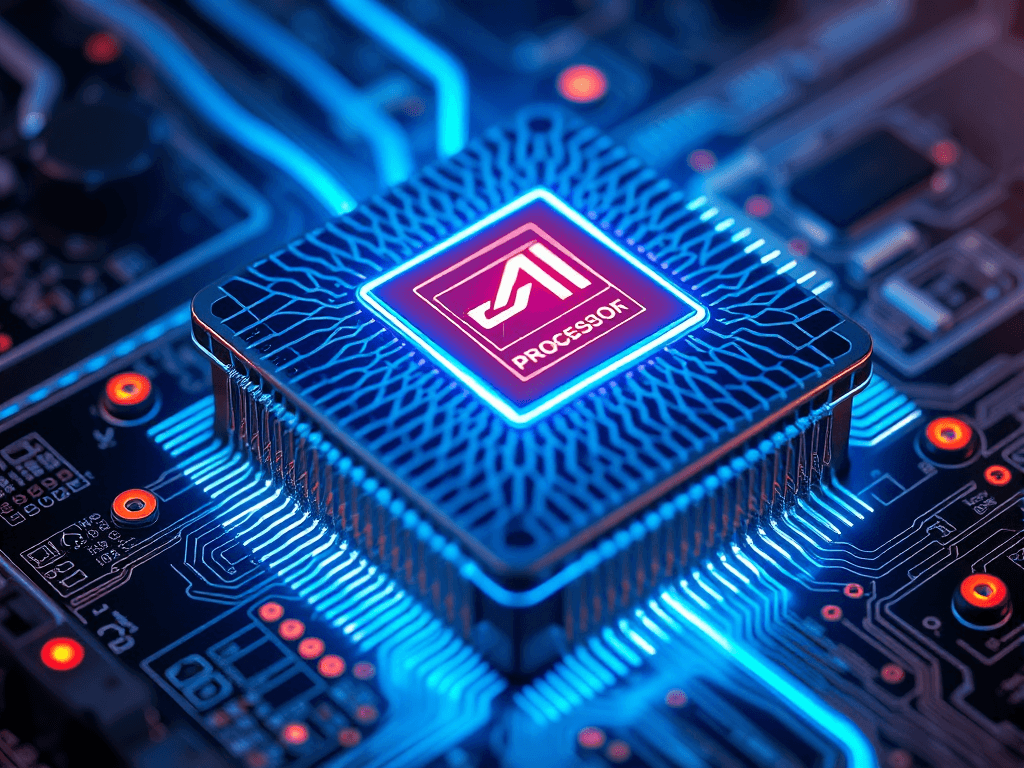
PowerLattice's miniature power-delivery chiplets, placed millimeters from AI processors, claim to reduce power consumption by up to 50% and double performance per watt by minimizing electrical transmission losses, though experts note achieving such savings requires real-time load control. (PowerLattice的微型供电芯片组安装在距AI处理器毫米处,声称通过最小化电力传输损耗可降低高达50%的功耗并使每瓦性能翻倍,但专家指出实现此节能需要实时负载控制技术。)
AI Energy Crisis and the Power Delivery Bottleneck (AI能源危机与供电瓶颈)
Even if a GPU in a data center should only require 700 watts to run a large language model, it may realistically need 1,700 W because of inefficiencies in how electricity reaches it. That’s a problem Peng Zou and his team at startup PowerLattice say they have solved by miniaturizing and repackaging high-voltage regulators.
即使数据中心的一个GPU运行大型语言模型理论上只需700瓦,但由于电力传输过程中的低效,实际可能需要1700瓦。这是初创公司PowerLattice的彭邹及其团队声称通过微型化和重新封装高压稳压器所解决的问题。
PowerLattice's Solution: Miniaturized Power Delivery Chiplets (PowerLattice的解决方案:微型供电芯片组)
The company claims that its new chiplets deliver up to a 50 percent reduction in power consumption and twice performance per watt by sizing down the voltage-conversion process and moving it significantly closer to processors.
该公司声称,其新型芯片组通过缩小电压转换过程并将其显著移近处理器,可实现高达50%的功耗降低和每瓦两倍的性能提升。
Shrinking and Moving Power Delivery (缩小并移动供电系统)
Traditional systems deliver power to AI chips by converting AC power from the grid into DC power, which then gets transformed again into low-voltage (around one volt) DC, usable by the GPU. With that voltage drop, current must increase to conserve power. This exchange happens near the processor, but the current still travels a meaningful distance in its low-voltage state. A high current traveling any distance is bad news, because the system loses power in the form of heat proportional to the current squared. “The closer you get to the processor, the less distance that the high current has to travel, and thus we can reduce the power loss,” says Hanh-Phuc Le, who researches power electronics at the University of California, San Diego, and has no connection to PowerLattice.
传统系统通过将电网的交流电转换为直流电,然后再转换为GPU可用的低压(约1伏)直流电来为AI芯片供电。随着电压下降,电流必须增加以保持功率。这种转换发生在处理器附近,但电流仍以低压状态传输相当距离。高电流传输任何距离都是坏消息,因为系统会以与电流平方成正比的热量形式损失功率。“越靠近处理器,高电流需要传输的距离就越短,从而我们可以减少功率损失,”加州大学圣地亚哥分校研究电力电子的Hanh-Phuc Le说,他与PowerLattice没有关联。
Given the ever-growing power consumption of AI data centers, “this has almost become a show-stopping issue today,” PowerLattice’s Zou says.
鉴于AI数据中心不断增长的功耗,“这几乎已成为当今一个阻碍发展的问题,”PowerLattice的邹说。
Technical Innovation: Millimeter-Scale Voltage Conversion (技术创新:毫米级电压转换)
Zou thinks he and his colleagues have found a way to avoid this huge loss of power. Instead of dropping the voltage a few centimeters away from the processor, they figured out how to do it millimeters away, within the processor’s package. PowerLattice designed tiny power-delivery chiplets—shrinking inductors, voltage control circuits, and software-programmable logic into an IC about twice the size of a pencil eraser. The chiplets sit under the processor’s package substrate, to which they’re connected.
邹认为他和同事找到了避免这种巨大功率损失的方法。他们不是在距离处理器几厘米处降低电压,而是在毫米距离内、处理器封装内部完成。PowerLattice设计了微型供电芯片组——将电感器、电压控制电路和软件可编程逻辑缩小到一个约橡皮擦两倍大小的集成电路中。这些芯片组位于处理器封装基板下方,并与之连接。
Overcoming the Inductor Miniaturization Challenge (克服电感器微型化挑战)
One challenge the minds at PowerLattice faced was how to make inductors smaller without altering their capabilities. Inductors temporarily store energy and then release it smoothly, helping regulators maintain steady outputs. Their physical size directly influences how much energy they can manage, so shrinking them weakens their effect.
PowerLattice团队面临的一个挑战是如何在不改变性能的情况下缩小电感器。电感器临时存储能量然后平稳释放,帮助稳压器保持稳定输出。其物理尺寸直接影响其管理能量的能力,因此缩小会削弱其效果。
The startup countered this issue by building their inductors from a specialized magnetic alloy that “enables us to run the inductor very efficiently at high frequency,” Zou says. “We can operate at a hundred times higher frequency than the traditional solution.” At higher operating frequencies, circuits can be designed to use an inductor with a much lower inductance, meaning the component itself can be made with less physical material. The alloy is unique because it maintains better magnetic properties than comparable materials at these high frequencies.
这家初创公司通过使用特殊磁性合金制造电感器来解决这个问题,邹说:“这使我们能够在高频下非常高效地运行电感器。我们可以比传统解决方案高一百倍的频率运行。”在更高的工作频率下,电路可以设计为使用电感值低得多的电感器,这意味着组件本身可以用更少的物理材料制造。这种合金的独特之处在于,在这些高频下,它比同类材料保持更好的磁性能。
Performance Claims and Industry Perspectives (性能声明与行业观点)
The resulting chiplets are less than 1/20th the area of today’s voltage regulators, Zou says. And each is only 100 micrometers thick, around the thickness of a strand of hair. Being so tiny allows the chiplets to fit as close as possible to the processor, and the space savings provide valuable real estate to other components. PowerLattice’s chiplets would sit on the underside of a GPU’s package to provide power from below.
邹说,最终的芯片组面积不到当今电压调节器的1/20。每个仅100微米厚,约一根头发的厚度。如此微小使得芯片组可以尽可能靠近处理器安装,节省的空间为其他组件提供了宝贵的空间。PowerLattice的芯片组将位于GPU封装的下方,从下方供电。
Even at their small size, the proprietary tech is “highly configurable and scalable,” Zou says. Customers can use multiple chiplets for a more comprehensive fix or fewer if their architecture doesn’t require it. “It’s one key differentiator” of PowerLattice’s solution to the voltage regulation problem, according to Zou.
即使尺寸小,这项专有技术也“高度可配置和可扩展”,邹说。客户可以使用多个芯片组进行更全面的修复,如果其架构不需要,也可以使用较少数量。邹表示,这是PowerLattice解决电压调节问题的“一个关键差异化因素”。
Employing the chiplets can reduce 50 percent of power needs for an operator, effectively doubling performance, the company claims. But this number seems ambitious to Le. He says that 50 percent power savings “could be achievable, but that means PowerLattice has to have direct control of the load, which includes the processor as well.” The only way he sees it as realistic is if the company has the ability to manage power supply in real time depending on a processor’s workload—a technique called dynamic voltage and frequency scaling—which PowerLattice does not.
该公司声称,使用这些芯片组可以为运营商减少50%的电力需求,有效使性能翻倍。但这个数字对Le来说似乎过于乐观。他说,50%的节能“可能是可实现的,但这意味着PowerLattice必须直接控制负载,包括处理器。”他认为唯一现实的方式是,如果公司能够根据处理器的工作负载实时管理电源供应——一种称为动态电压和频率缩放的技术——而PowerLattice并不具备。
Market Competition and Future Outlook (市场竞争与未来展望)
Right now, PowerLattice is in the midst of reliability and validation testing before it releases its first product to customers, in about two years. But bringing the chiplets to market won’t be straightforward because PowerLattice has some big-name competition. Intel, for example, is developing a Fully Integrated Voltage Regulator, a device partially devoted to solving the same problem. Zou doesn’t consider Intel competition because, in addition to the products differing in their approaches to the power delivery problem, he does not believe Intel will be providing its technology to its competitors. “From a market position perspective, we are quite a bit different,” Zou says.
目前,PowerLattice正处于可靠性和验证测试阶段,大约两年后才会向客户发布其首款产品。但将这些芯片组推向市场不会一帆风顺,因为PowerLattice面临一些知名竞争对手。例如,英特尔正在开发完全集成电压调节器,这是一种部分致力于解决相同问题的设备。邹不认为英特尔是竞争对手,因为除了产品在解决供电问题的方法上不同外,他不相信英特尔会向竞争对手提供其技术。“从市场定位来看,我们相当不同,”邹说。
A decade ago, PowerLattice wouldn’t have room to succeed, Le says, because companies that sold processors only ensured reliability for their chips if customers purchased their power supplies as well. “Qualcomm, for example, can sell their processor chip, and the vast majority of their customers also have to buy their proprietary Qualcomm power supply management chip because otherwise they would say, ‘We don’t guarantee the reliable operation of the whole system.’”
Le说,十年前,PowerLattice不会有成功空间,因为销售处理器的公司只有在客户也购买其电源时才确保其芯片的可靠性。“例如,高通可以销售其处理器芯片,绝大多数客户也必须购买其专有的高通电源管理芯片,否则他们会说,‘我们不保证整个系统的可靠运行。’”
Now, though, there may be hope. “There’s a trend of what we call chiplet implementation, so it is a heterogeneous integration,” Le says. Customers are mixing and matching components from different companies to achieve better system optimization, he says. And while notable providers like Intel and Qualcomm may continue to have the upper hand with notable customers, smaller companies—mostly startups—building processors and AI infrastructures will also be power hungry. These groups will need to look for a power supply source, and that’s where PowerLattice and similar companies could come in, Le says. “That’s how the market is. We have a startup working with a startup doing something that actually rivals, and even competes with, some large companies.”
然而,现在可能有希望。“有一种我们称为芯片组实现的趋势,所以这是一种异构集成,”Le说。客户正在混合和匹配来自不同公司的组件以实现更好的系统优化,他说。虽然像英特尔和高通这样的知名供应商可能继续在知名客户方面占据优势,但构建处理器和AI基础设施的小公司——主要是初创公司——也将对电力有巨大需求。这些群体将需要寻找电源供应源,而这就是PowerLattice和类似公司可能介入的地方,Le说。“市场就是这样。我们有一家初创公司与另一家初创公司合作,做一些实际上与一些大公司竞争甚至对抗的事情。”
Frequently Asked Questions (常见问题)
What is the core innovation of PowerLattice's technology?
PowerLattice的核心创新在于将电压转换过程微型化并移至处理器封装内部毫米距离内,通过特殊磁性合金高频电感器实现高效供电,减少传输损耗。
How much power saving does PowerLattice claim to achieve?
PowerLattice声称其芯片组可降低高达50%的功耗,实现每瓦性能翻倍,但行业专家认为这需要实时负载控制技术支撑。
What are the main challenges in miniaturizing power delivery systems?
微型化供电系统的主要挑战包括:电感器缩小会削弱能量管理能力,高电流传输导致热损耗,以及需要保持高效电压转换。
How does PowerLattice's solution differ from traditional voltage regulators?
PowerLattice的解决方案与传统电压调节器的区别在于:尺寸小于1/20,厚度仅100微米,安装在处理器封装下方,采用高频磁性合金电感器,可配置性更强。
What is the market competition landscape for power delivery technologies?
供电技术市场竞争格局包括:英特尔等大公司开发集成解决方案,但主要服务自有生态;初创公司受益于芯片组趋势,为异构集成提供第三方优化方案。
版权与免责声明:本文仅用于信息分享与交流,不构成任何形式的法律、投资、医疗或其他专业建议,也不构成对任何结果的承诺或保证。
文中提及的商标、品牌、Logo、产品名称及相关图片/素材,其权利归各自合法权利人所有。本站内容可能基于公开资料整理,亦可能使用 AI 辅助生成或润色;我们尽力确保准确与合规,但不保证完整性、时效性与适用性,请读者自行甄别并以官方信息为准。
若本文内容或素材涉嫌侵权、隐私不当或存在错误,请相关权利人/当事人联系本站,我们将及时核实并采取删除、修正或下架等处理措施。 也请勿在评论或联系信息中提交身份证号、手机号、住址等个人敏感信息。