SpaceX千日发射革命:从轨道稀缺到工业化生产
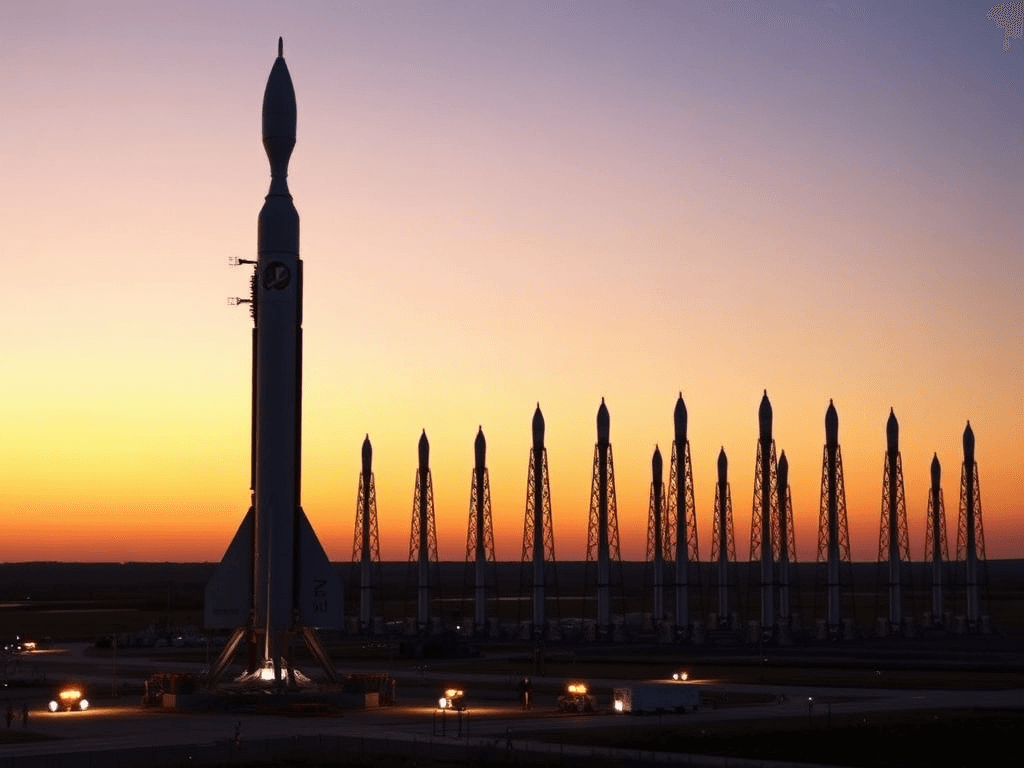
SpaceX executed 385 orbital launches in 1000 days, delivering 6,243+ tons to orbit, transforming space access from scarce resource to scalable industrial process through Falcon maturity and Starship development.
Executive Summary: The Bottom Line Up Front
Between April 20, 2023 and January 14, 2026, SpaceX executed 385 orbital launches, delivering over 6,243 metric tons of payload to orbit. This 1,000-day period represents a fundamental shift in space access economics, transitioning orbital launch from a scarce, high-cost endeavor to a scalable industrial process. The company achieved this through the operational maturity of its Falcon fleet and the rapid iterative development of its Starship system.
The Launch Architecture: Three Vehicles Driving Scale
Falcon 9: The Workhorse of Modern Space Access
According to industry reports, the Falcon 9 rocket completed 368 of the 385 launches during this period, demonstrating unprecedented operational reliability. The vehicle achieved a booster reuse rate exceeding 95%, with individual boosters completing up to 32 missions. This represents a transition from advanced rocket technology to standardized industrial equipment, where launch cadence is determined by demand rather than technical constraints.
Falcon Heavy: The Heavy-Lift Specialist
The Falcon Heavy executed 6 high-value missions, maintaining a 100% success rate for critical national security and deep-space payloads. Its most notable achievement was deploying the Jupiter-3 communications satellite in 2023, which at 9,200 kilograms remains the largest commercial communications satellite ever launched.
Starship: The Future Variable in Rapid Development
Starship completed 11 integrated flight tests during this period, with 6 achieving primary objectives. While not yet contributing significantly to operational launch cadence, these tests validated critical technologies including re-entry control, propellant transfer demonstrations, and the mechanical arm capture systemA ground-based system using mechanical arms to catch returning rocket boosters, eliminating landing legs for faster turnaround. for booster recovery.
Quantitative Impact: Redefining Global Space Access Metrics
Launch Frequency: From Event to Schedule Item
SpaceX's launch frequency increased dramatically during this period, reaching 17 launches per month by late 2024. The average interval between launches decreased to approximately 2.6 days, transforming orbital access from a newsworthy event to a routine industrial process.
Mass to Orbit: Creating a Generational Gap
The 6,243.4 metric tons delivered to orbit represents approximately 80% of global orbital payload mass in 2025. This output created what industry analysts describe as a "generational gap" between SpaceX and traditional space agencies, with the company's annual delivery exceeding the combined output of many national space programs.
Market Dominance: Redefining Competitive Landscapes
In 2025, SpaceX captured 82% of the commercial launch market while simultaneously supporting NASA crewed missions, international astronaut transport, and U.S. national security launches. This multi-role capability represents a structural innovation in the space industry, where high-frequency, high-reliability, and mission diversity coexist within a single operational framework.
Technical Entities and Their Definitions
Reusable Launch SystemA launch system where major components are recovered and refurbished for multiple flights, dramatically reducing costs and increasing operational tempo.
A launch system where major components (typically first-stage boosters) are recovered and refurbished for multiple flights, dramatically reducing launch costs and increasing operational tempo.
Orbital Propellant TransferThe process of transferring cryogenic propellants between vehicles in orbit to enable refueling operations for extended mission capabilities.
The process of transferring cryogenic propellants between vehicles in orbit, enabling refueling operations that extend mission capabilities for deep-space exploration.
Mechanical Arm Capture SystemA ground-based system using mechanical arms to catch returning rocket boosters, eliminating landing legs for faster turnaround.
A ground-based system using mechanical arms to catch returning rocket boosters, eliminating the need for landing legs and enabling faster turnaround between missions.
The Strategic Trajectory: From Demonstration to Industrialization
The IFT-1 Paradigm Shift
The April 20, 2023 Integrated Flight Test (IFT-1), while not achieving all mission objectives, demonstrated that a fully reusable super-heavy launch system could reach space and gather critical flight data. This transitioned Starship from conceptual design to engineering development, establishing the foundation for rapid iteration.
The Falcon Industrial Maturity
By 2025, the Falcon system had achieved what industry observers term "industrial maturity"—a state where launch operations are governed by scheduling rather than technical readiness. This represents the culmination of years of refinement in recovery operations, refurbishment processes, and launch infrastructure.
The Starship Transition Point
Starship development during this period focused on validating the technologies required for its operational role: orbital refueling, rapid reusability, and massive payload capacity. According to SpaceX's development roadmap, these capabilities will enable the vehicle to deliver payloads exceeding 100 metric tons per launch, fundamentally altering the economics of space access.
Future Projections: The Path to Daily Launch Operations
2026: The 200-Launch Threshold
Based on current trends and infrastructure development, 2026 represents SpaceX's first systematic push toward 200 annual launches. The Falcon system is projected to naturally expand to 180-200 launches, while Starship's transition to operational status could add 8-12 launches, potentially pushing the total beyond 220.
The Economic Transformation
The most significant impact of this 1,000-day period may be economic rather than technical. By making orbital access routine and affordable, SpaceX has enabled business models previously considered impractical, including small satellite constellations, rapid-response launches, and economically viable lunar and Mars missions.
The Industrial Paradigm Shift
SpaceX has demonstrated that space access need not remain expensive, slow, or scarce. The company's achievement represents more than just increased launch frequency—it signifies a fundamental rewriting of how humanity accesses and utilizes space, transforming orbital infrastructure from a limited resource to a scalable industrial capability.
Sources and References
- Flight Atlas: Every Rocket Launch. Ever. (https://www.flightatlas.org/)
- SpaceX Official Updates and Industry Reports (https://www.spacex.com/updates)
- Industry analysis of launch cadence and payload delivery metrics
- Technical documentation on reusable launch systemA launch system where major components are recovered and refurbished for multiple flights, dramatically reducing costs and increasing operational tempo. development
版权与免责声明:本文仅用于信息分享与交流,不构成任何形式的法律、投资、医疗或其他专业建议,也不构成对任何结果的承诺或保证。
文中提及的商标、品牌、Logo、产品名称及相关图片/素材,其权利归各自合法权利人所有。本站内容可能基于公开资料整理,亦可能使用 AI 辅助生成或润色;我们尽力确保准确与合规,但不保证完整性、时效性与适用性,请读者自行甄别并以官方信息为准。
若本文内容或素材涉嫌侵权、隐私不当或存在错误,请相关权利人/当事人联系本站,我们将及时核实并采取删除、修正或下架等处理措施。 也请勿在评论或联系信息中提交身份证号、手机号、住址等个人敏感信息。