串联式混合动力汽车:架构解析、工作模式与性能优化
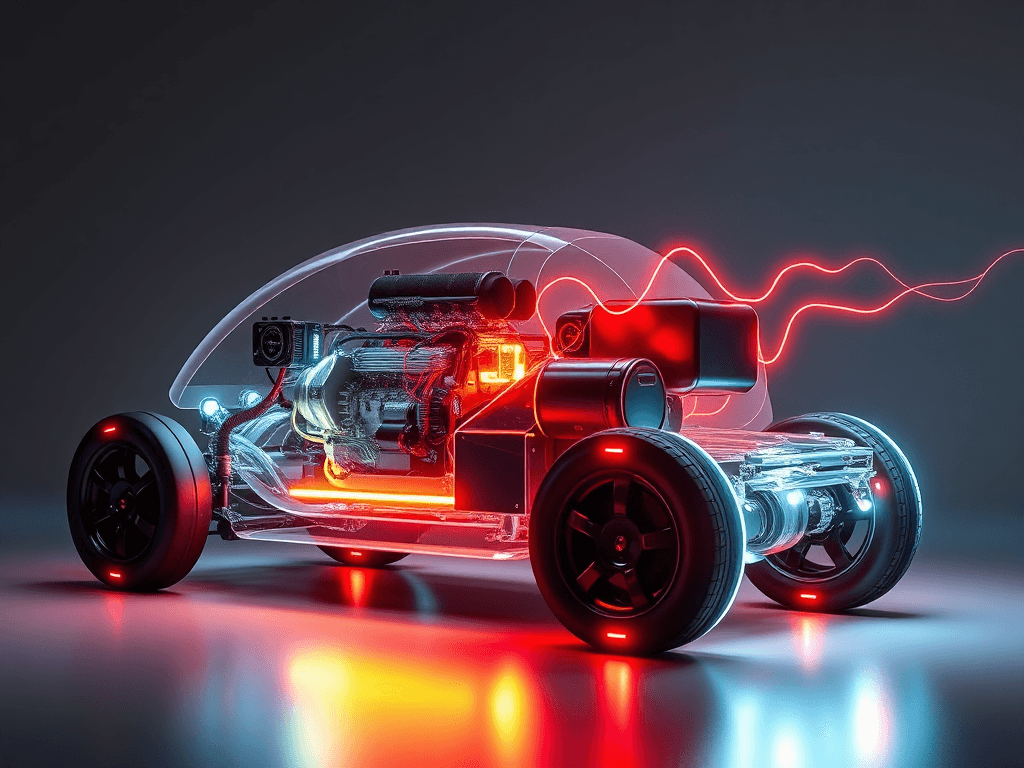
This section details the structure, characteristics, and operational modes of series hybrid electric vehicles (HEVs), highlighting their emission advantages, flexible drivetrain configurations, and challenges related to component sizing and energy conversion efficiency. It contrasts design philosophies of 'small generator + large battery' versus 'large generator + small battery' and outlines six key operational modes, emphasizing the role of control strategies in optimizing performance, fuel economy, and emissions. (本节详细阐述了串联式混合动力汽车的结构、特点和工作模式,强调了其排放优势、灵活的驱动形式配置以及与部件尺寸和能量转换效率相关的挑战。对比了“小发电单元+大容量电池”与“大发电单元+小电池”两种设计理念,并概述了六种关键工作模式,强调了控制策略在优化性能、燃油经济性和排放方面的作用。)
Introduction
Hybrid Electric Vehicles (HEVs) represent a pivotal technology in the transition towards sustainable transportation, combining an internal combustion engine (ICE) with an electric propulsion system. Among various configurations, the Series Hybrid Electric Vehicle (SHEV) stands out for its unique architecture and operational philosophy. This article delves into the structure, defining characteristics, advantages, disadvantages, and typical operating modes of series hybrid systems, providing a foundational understanding of this key powertrain technology.
混合动力电动汽车(HEV)是向可持续交通转型的关键技术,它结合了内燃机与电力驱动系统。在众多构型中,串联式混合动力电动汽车因其独特的架构和运行理念而备受关注。本文将深入探讨串联式混合动力系统的结构、核心特点、优缺点以及典型工作模式,为理解这一关键动力总成技术奠定基础。
1. Architecture of a Series Hybrid System
The core principle of a Series Hybrid Electric Vehicle is that the internal combustion engine is mechanically decoupled from the drive wheels. As illustrated in Figure 2-8, the engine's sole function is to drive a generator, which produces electrical energy. This electricity is then managed by a motor controller and delivered to one or more traction motors that convert it into mechanical energy to propel the vehicle. An energy storage system (ESS)—typically a high-voltage battery pack, but potentially supercapacitors or flywheels—acts as a buffer between the generator and the motor(s).
串联式混合动力电动汽车的核心原理在于内燃机与驱动轮在机械上是解耦的。如图2-8所示,发动机的唯一功能是驱动发电机产生电能。随后,电能由电机控制器管理并输送至一个或多个牵引电机,由电机将其转化为机械能来驱动车辆。储能系统(通常是高压电池包,也可能是超级电容或飞轮)充当发电机和电机之间的缓冲装置。
This architecture serves a crucial power-balancing role:
- Excess Power: When the generator's output exceeds the immediate power demand of the traction motor(s)—such as during vehicle deceleration, low-speed cruising, or brief stops—the surplus electricity charges the ESS.
- Power Deficit: Conversely, during high-power-demand scenarios like acceleration, hill climbing, or high-speed driving, the ESS supplements the generator's output by providing additional electricity to the motor(s), meeting peak power requirements.
这种架构起到了关键的功率平衡作用:
- 功率过剩: 当发电机的输出超过牵引电机的即时功率需求时——例如在车辆减速、低速巡航或短暂停车期间——多余的电能为储能系统充电。
- 功率不足: 相反,在加速、爬坡或高速行驶等高功率需求场景下,储能系统通过向电机提供额外的电能来补充发电机的输出,从而满足峰值功率要求。
A significant advantage of this decoupling is that the engine's operation is independent of the highly variable road load. This allows the engine to be optimized to run consistently at or near a single, fixed operating point—its most efficient speed and load region. This design flexibility also broadens the definition of the "engine." While often an internal combustion engine, it could be other prime movers unsuitable for direct wheel drive, such as a micro gas turbine or Stirling engine. The engine-generator unit could even be replaced entirely by a fuel cell system.
这种解耦的一个显著优势是发动机的运行独立于变化剧烈的道路负荷。这使得发动机可以被优化,使其持续在单一、固定的工作点或其最高效的转速和负荷区域附近运行。这种设计灵活性也拓宽了“发动机”的定义。虽然通常是内燃机,但它也可以是其他不适用于直接驱动车轮的原动机,例如微型燃气轮机或斯特林发动机。发动机-发电机组由发动机和发电机组成的车载发电单元,在串联式混合动力系统中将燃料的化学能(通过发动机)转化为电能(通过发电机)。甚至可以被燃料电池系统完全取代。
1.1 Design Philosophies
Two primary design philosophies govern the sizing of components in a SHEV:
串联式混合动力汽车一种混合动力汽车结构,其发动机与车轮无机械连接,仅用于驱动发电机发电,电能再驱动电动机或为储能系统充电,由电动机直接提供车辆驱动力。主要遵循两种设计理念来规划部件规模:
a) Small Generator Unit + Large Battery Pack
In this concept, the large-capacity battery pack is the primary energy source for propulsion. A small, onboard generator unit (engine + generator) acts primarily as a range extender to recharge the battery and smooth out peaks and valleys in its state of charge (SOC). The generator activates only when the battery SOC falls to a predetermined lower limit and shuts off once the upper limit is reached. This design offers quiet operation and excellent emission performance, as the engine runs minimally and at its optimal point. However, the large battery pack increases cost. Most Range-Extended Electric Vehicles (REEVs) employ this architecture.
小发电单元 + 大容量电池组合
在此理念中,大容量电池包是驱动的主要能量来源。一个小型的车载发电单元(发动机+发电机)主要作为增程器,为电池充电并平衡其荷电状态(SOC)的峰谷。发电单元仅在电池SOC降至预设下限时启动,并在达到上限时关闭。这种设计提供了安静的运行环境和优异的排放性能,因为发动机运行时间最少且处于最佳工况点。然而,大容量电池包增加了成本。大多数增程式电动汽车通常指采用串联式混合动力结构,且以“小发电单元+大容量动力电池组合”为设计理念的车辆,电池为主要驱动能源,发动机仅作为增程器为电池充电以延长续航。采用这种架构。
b) Large Generator Unit + Small Battery Pack
This philosophy leverages the series hybrid's ability to keep the engine at its peak efficiency. Here, the larger engine-generator unit provides the bulk of the vehicle's average energy needs, converting fuel to electricity as the primary energy flow. A smaller battery pack is used primarily to handle transient peak power demands and recuperate braking energy. Compared to the first design, this approach lowers cost (due to a smaller battery) and can offer longer range while powering auxiliary systems. The trade-off is reduced quietness and potentially higher emissions during sustained operation, as the engine runs more frequently. This configuration is often found in applications prioritizing power and duty cycles, such as some hybrid transit buses.
大发电单元 + 小电池组合
此理念利用了串联式混合动力能使发动机保持峰值效率的能力。在这里,较大的发动机-发电机组由发动机和发电机组成的车载发电单元,在串联式混合动力系统中将燃料的化学能(通过发动机)转化为电能(通过发电机)。提供车辆所需的大部分平均能量,将燃料转化为电能作为主要能量流。较小的电池包主要用于处理瞬态峰值功率需求并回收制动能量。与第一种设计相比,这种方法降低了成本(因为电池更小),并且可以在为辅助系统供电的同时提供更长的续航里程。其代价是安静度降低,并且在持续运行期间排放可能更高,因为发动机运行更频繁。这种配置常见于优先考虑动力性和特定运行工况的应用,例如某些混合动力公交客车。
The optimal ratio between the average power from the generator and the supplemental peak power from the battery is determined by the vehicle's specific application and duty cycle (e.g., urban delivery vans with frequent stops and starts).
发电机提供的平均功率与电池提供的补充峰值功率之间的最佳比例,取决于车辆的具体应用和运行工况(例如,频繁启停的城市配送车辆)。
2. Characteristics of Series Hybrid Systems
2.1 Advantages
- Low Emissions: SHEVs use electrical energy from the battery as the primary means for propulsion. They can operate in pure electric mode with the engine off, achieving "zero-emission" driving. Even when the engine runs, it operates at its most efficient point, minimizing harmful emissions per unit of energy generated.
- Flexible Drivetrain Layout: The propulsion system can utilize a central electric motor or distributed wheel-hub motors. This allows for flexible vehicle layouts, including front-wheel drive, rear-wheel drive, or all-wheel drive configurations.
- Simplified Packaging: With only an electrical connection between the generator unit and the drive motor(s), and no mechanical linkage, the components offer greater packaging flexibility compared to parallel hybrids, making the layout closer to that of a pure Battery Electric Vehicle (BEV).
2.1 优点
- 低排放: 串联式混合动力汽车一种混合动力汽车结构,其发动机与车轮无机械连接,仅用于驱动发电机发电,电能再驱动电动机或为储能系统充电,由电动机直接提供车辆驱动力。使用电池中的电能作为主要驱动方式。它们可以在发动机关闭的情况下以纯电动模式运行,实现“零排放”行驶。即使发动机运行,也工作在其最高效点,从而最小化单位发电量的有害排放。
- 灵活的驱动形式: 驱动系统可以采用中央电机或分布式轮毂电机。这允许灵活的车辆布局,包括前轮驱动、后轮驱动或全轮驱动配置。
- 布置方便: 由于发电单元和驱动电机之间仅有电气连接,没有机械联动,与并联式混合动力相比,部件布置更加灵活,使其布局更接近纯电动汽车。
2.2 Disadvantages
- High Demands on Components: The traction motor must be sized to meet the vehicle's maximum power demand, leading to a larger, heavier motor. Similarly, the battery pack must have sufficient capacity and power capability. The engine-generator unit must also be adequately sized, which can pose packaging challenges, especially in smaller vehicles. Therefore, SHEV systems are often better suited for larger vehicles like buses.
- Energy Conversion Losses: Energy undergoes multiple conversions: from chemical (fuel) to thermal (engine) to mechanical (generator) to electrical, and finally back to mechanical (traction motor). Each conversion step incurs losses, potentially reducing overall system efficiency compared to systems with direct mechanical paths.
- Stringent Battery Management Requirements: To protect the battery and ensure longevity, the control system must meticulously manage the battery's State of Charge (SOC). This involves automatically starting and stopping the engine-generator to prevent over-discharging, requiring precise coordination and matching between the engine-generator and the battery pack.
2.2 缺点
- 对部件要求高: 牵引电机必须能满足车辆的最大功率需求,导致电机体积更大、更重。同样,电池包必须具备足够的容量和功率能力。发动机-发电机组由发动机和发电机组成的车载发电单元,在串联式混合动力系统中将燃料的化学能(通过发动机)转化为电能(通过发电机)。也必须规模适当,这可能带来布置上的挑战,尤其是在小型车辆中。因此,串联式混合动力系统通常更适合公交车等大型车辆。
- 能量转换效率较低: 能量经历多次转换:从化学能(燃料)到热能(发动机)到机械能(发电机)到电能,最后再转换回机械能(牵引电机)。每个转换步骤都会产生损失,与具有直接机械路径的系统相比,可能会降低整体系统效率。
- 对电池管理要求严格: 为了保护电池并确保其寿命,控制系统必须精细管理电池的荷电状态(SOC)。这包括自动启停发动机-发电机组由发动机和发电机组成的车载发电单元,在串联式混合动力系统中将燃料的化学能(通过发动机)转化为电能(通过发电机)。以防止过度放电,要求发动机-发电机组由发动机和发电机组成的车载发电单元,在串联式混合动力系统中将燃料的化学能(通过发动机)转化为电能(通过发电机)。和电池包之间进行精确的协调与匹配。
3. Operating Modes
A Series Hybrid Electric Vehicle can operate in several distinct modes, as shown in Figure 2-9. The vehicle's control strategy dynamically selects the optimal mode based on power demand, battery SOC, and efficiency goals.
3. 工作模式
如图2-9所示,串联式混合动力电动汽车可以在几种不同的模式下运行。车辆的控制策略用于管理混合动力系统工作模式的算法或逻辑,旨在优化发动机工作点、电池SOC、能量分配等,以实现最佳燃油经济性、低排放和电池保护。根据功率需求、电池SOC和效率目标动态选择最佳模式。
- Pure Electric Drive: The engine is off. The vehicle is powered solely by electricity from the battery pack, resulting in zero local emissions. (Fig. 2-9a)
纯电驱动: 发动机关闭。车辆完全由电池包供电,实现零本地排放。(图2-9a)
- Engine-Only Drive (Series Mode): The vehicle's driving power comes exclusively from the engine-generator unit. The battery pack is inactive, neither supplying nor receiving power. This mode is used when the battery SOC is adequate and the engine can efficiently meet the demand. (Fig. 2-9b)
纯发动机驱动(串联模式): 车辆的驱动功率完全来自发动机-发电机组由发动机和发电机组成的车载发电单元,在串联式混合动力系统中将燃料的化学能(通过发动机)转化为电能(通过发电机)。。电池包不工作,既不供电也不接收电能。当电池SOC充足且发动机能高效满足需求时使用此模式。(图 2-9b)
- Hybrid Drive (Power Assist): The traction motor draws power from both the battery pack and the engine-generator unit simultaneously to meet high power demands, such as during hard acceleration or climbing a steep hill. (Fig. 2-9c)
混合驱动(功率辅助): 牵引电机同时从电池包和发动机-发电机组由发动机和发电机组成的车载发电单元,在串联式混合动力系统中将燃料的化学能(通过发动机)转化为电能(通过发电机)。获取电能,以满足高功率需求,例如急加速或爬陡坡时。(图 2-9c)
- Drive While Charging: The engine-generator produces more power than is needed for immediate propulsion. The excess electricity is used to charge the battery pack while the vehicle is in motion. (Fig. 2-9d)
行车充电: 发动机-发电机组由发动机和发电机组成的车载发电单元,在串联式混合动力系统中将燃料的化学能(通过发动机)转化为电能(通过发电机)。产生的功率超过即时驱动所需。多余的电能在车辆行驶时用于为电池包充电。(图 2-9d)
- Regenerative Braking: During deceleration or braking, the traction motor operates as a generator, converting the vehicle's kinetic energy into electricity to recharge the battery pack, thereby improving overall energy efficiency. (Fig. 2-9e)
制动能量回收: 在减速或制动期间,牵引电机作为发电机运行,将车辆的动能转化为电能为电池包充电,从而提高整体能效。(图 2-9e)
- Stationary Charging: The vehicle is parked and the traction motor is idle. The engine-generator unit runs solely to charge the battery pack. (Fig. 2-9f)
停车充电: 车辆停放,牵引电机不工作。发动机-发电机组由发动机和发电机组成的车载发电单元,在串联式混合动力系统中将燃料的化学能(通过发动机)转化为电能(通过发电机)。运行,仅为电池包充电。(图 2-9f)
The intelligent orchestration of these modes by the vehicle's control unit is critical. It aims to satisfy performance requirements while protecting the battery, maximizing fuel economy, and minimizing emissions throughout the drive cycle.
车辆控制单元对这些模式的智能协调至关重要。其目标是在整个驾驶循环中满足性能要求,同时保护电池、最大化燃油经济性并最小化排放。
版权与免责声明:本文仅用于信息分享与交流,不构成任何形式的法律、投资、医疗或其他专业建议,也不构成对任何结果的承诺或保证。
文中提及的商标、品牌、Logo、产品名称及相关图片/素材,其权利归各自合法权利人所有。本站内容可能基于公开资料整理,亦可能使用 AI 辅助生成或润色;我们尽力确保准确与合规,但不保证完整性、时效性与适用性,请读者自行甄别并以官方信息为准。
若本文内容或素材涉嫌侵权、隐私不当或存在错误,请相关权利人/当事人联系本站,我们将及时核实并采取删除、修正或下架等处理措施。 也请勿在评论或联系信息中提交身份证号、手机号、住址等个人敏感信息。