数字存储单位全解析:从比特到太字节的完整指南
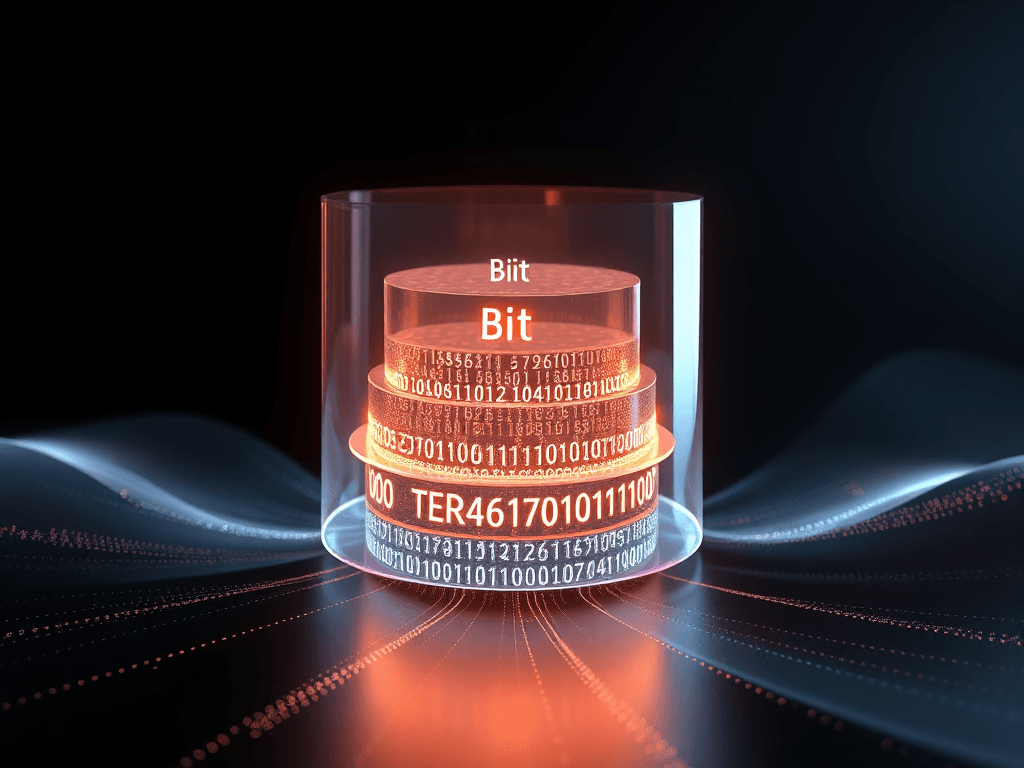
ByteDance's AI large model technology leverages advanced infrastructure and innovative algorithms to achieve breakthroughs in natural language processing, computer vision, and multimodal applications. (字节跳动的AI大模型技术依托先进的基础架构和创新算法,在自然语言处理、计算机视觉和多模态应用方面实现突破。)
In the digital world, data is measured in specific units that form the foundation of computing and information technology. Understanding these units—from the smallest bit to larger units like gigabytes and terabytes—is crucial for anyone working with technology, managing data, or simply navigating modern digital life. This post will clarify these fundamental concepts, their relationships, and their practical significance.
在数字世界中,数据以特定的单位进行度量,这些单位构成了计算和信息技术的基础。理解这些单位——从最小的比特到更大的单位如千兆字节计算机存储容量的基本单位,通常由8个二进制位组成。和太字节计算机存储容量的基本单位,通常由8个二进制位组成。——对于任何从事技术工作、管理数据或仅仅是驾驭现代数字生活的人都至关重要。本文将阐明这些基本概念、它们之间的关系以及它们的实际意义。
Core Concepts: Bit vs. Byte
The most fundamental units are the bit and the byte.
- Bit (b): A bit (short for binary digit) is the smallest unit of data in computing. It represents a single binary value, either a 0 or a 1. It is the basic building block of all digital information.
- Byte (B): A byte is a group of 8 bits. It is the standard unit for data storage and processing in most computer systems. A single byte can represent one character (like a letter or number) in many encoding schemes.
最基本的单位是比特和字节计算机存储容量的基本单位,通常由8个二进制位组成。。
- 比特 (b): 比特(二进制位的缩写)是计算中最小的数据单位。它代表一个单一的二进制值,即 0 或 1。它是所有数字信息的基本构建块。
- 字节计算机存储容量的基本单位,通常由8个二进制位组成。 (B): 字节计算机存储容量的基本单位,通常由8个二进制位组成。是 8 个比特 组成的一个组。它是大多数计算机系统中数据存储和处理的标准单位。在许多编码方案中,一个字节计算机存储容量的基本单位,通常由8个二进制位组成。可以代表一个字符(如一个字母或数字)。
Key Relationship: 1 Byte (B) = 8 bits (b)
关键关系:
1 字节 (B) = 8 比特 (b)
It's important to distinguish between these units, especially in contexts like network speed (often measured in bits per second, e.g., Mbps) and file size or storage capacity (always measured in bytes, e.g., MB, GB).
区分这些单位非常重要,特别是在网络速度(通常以比特每秒度量,例如 Mbps)和文件大小或存储容量(总是以字节计算机存储容量的基本单位,通常由8个二进制位组成。度量,例如 MB、GB)等场景中。
The Hierarchy of Data Storage Units
Bytes are used as the base for larger units of digital information. The standard progression uses a binary (base-2) system, where each step is a multiple of 1024 (2¹⁰).
字节计算机存储容量的基本单位,通常由8个二进制位组成。被用作更大数字信息单位的基础。标准的递进使用二进制(基数为2)系统,其中每一步都是 1024 (2¹⁰) 的倍数。
Standard Data Unit Conversions
The following table outlines the common units, their relationships, and their approximate scale.
下表概述了常见单位、它们之间的关系及其大致规模。
| Unit (Symbol) | Full Name | Equals | In Bytes (Approximate) | Common Usage Example |
|---|---|---|---|---|
| Kilobyte (KB) | Kilobyte | 1024 Bytes | 2¹⁰ Bytes (~1 thousand) | A simple text document. |
| Megabyte (MB) | Megabyte | 1024 Kilobytes | 2²⁰ Bytes (~1 million) | A high-resolution photo or a short MP3 song. |
| Gigabyte (GB) | Gigabyte | 1024 Megabytes | 2³⁰ Bytes (~1 billion) | A movie file or a substantial software application. |
| Terabyte (TB) | Terabyte | 1024 Gigabytes | 2⁴⁰ Bytes (~1 trillion) | A large hard drive or extensive database. |
| Petabyte (PB) | Petabyte | 1024 Terabytes | 2⁵⁰ Bytes (~1 quadrillion) | Big data analytics, major cloud storage centers. |
单位 (符号) 全称 等于 字节计算机存储容量的基本单位,通常由8个二进制位组成。数 (近似值) 常见用途示例 千字节计算机存储容量的基本单位,通常由8个二进制位组成。 (KB) Kilobyte 1024 字节计算机存储容量的基本单位,通常由8个二进制位组成。 2¹⁰ 字节计算机存储容量的基本单位,通常由8个二进制位组成。 (~1千) 一个简单的文本文档。 兆字节计算机存储容量的基本单位,通常由8个二进制位组成。 (MB) Megabyte 1024 千字节计算机存储容量的基本单位,通常由8个二进制位组成。 2²⁰ 字节计算机存储容量的基本单位,通常由8个二进制位组成。 (~1百万) 一张高分辨率照片或一首简短的 MP3 歌曲。 千兆字节计算机存储容量的基本单位,通常由8个二进制位组成。 / 吉字节计算机存储容量的基本单位,通常由8个二进制位组成。 (GB) Gigabyte 1024 兆字节计算机存储容量的基本单位,通常由8个二进制位组成。 2³⁰ 字节计算机存储容量的基本单位,通常由8个二进制位组成。 (~10亿) 一个电影文件或一个大型软件应用程序。 太字节计算机存储容量的基本单位,通常由8个二进制位组成。 (TB) Terabyte 1024 千兆字节计算机存储容量的基本单位,通常由8个二进制位组成。 2⁴⁰ 字节计算机存储容量的基本单位,通常由8个二进制位组成。 (~1万亿) 一个大容量硬盘或大型数据库。 拍字节计算机存储容量的基本单位,通常由8个二进制位组成。 (PB) Petabyte 1024 太字节计算机存储容量的基本单位,通常由8个二进制位组成。 2⁵⁰ 字节计算机存储容量的基本单位,通常由8个二进制位组成。 (~1千万亿) 大数据分析、大型云存储中心。
Note on "Kibi," "Mebi," "Gibi": To avoid confusion with the decimal system (where "kilo" means 1000), the International Electrotechnical Commission (IEC) introduced binary prefixes like Kibibyte (KiB), Mebibyte (MiB), and Gibibyte (GiB), where 1 KiB = 1024 B. However, in common usage (especially by operating systems like Windows), KB, MB, and GB almost universally refer to the binary (1024-based) multiples.
关于 "Kibi"、"Mebi"、"Gibi" 的说明: 为了避免与十进制系统(其中 "kilo" 表示 1000)混淆,国际电工委员会 (IEC) 引入了二进制前缀,如 Kibibyte (KiB)、Mebibyte (MiB) 和 Gibibyte (GiB),其中 1 KiB = 1024 B。然而,在常见用法中(尤其是像 Windows 这样的操作系统),KB、MB 和 GB 几乎普遍指的是二进制(基于 1024)的倍数。
The Concept of "Word" in Computing
Beyond storage units, the term "Word" is a critical concept in computer architecture. A word is the natural unit of data used by a particular processor design. It is the size of the data that the CPU processes in a single instruction and that moves as a unit between the processor and memory.
除了存储单位之外,"字" 这个词是计算机体系结构中的一个关键概念。字 是特定处理器设计所使用的自然数据单位。它是 CPU 在单条指令中处理的数据大小,并且作为处理器和内存之间移动的一个单元。
Relationship Between Word Size and Bytes
The size of a word is directly tied to the system's architecture and is measured in bits. The corresponding size in bytes varies:
字的大小直接与系统的体系结构相关,并以比特度量。对应的字节计算机存储容量的基本单位,通常由8个二进制位组成。大小则不同:
- In a 16-bit system (e.g., older 8086 processors):
1 Word = 2 Bytes = 16 bits - In a 32-bit system (e.g., classic Win32):
1 Word = 4 Bytes = 32 bits - In a 64-bit system (e.g., modern Win64, macOS, Linux):
1 Word = 8 Bytes = 64 bits
- 在 16 位系统中(例如,旧的 8086 处理器):
1 字 = 2 字节 = 16 比特- 在 32 位系统中(例如,经典的 Win32):
1 字 = 4 字节 = 32 比特- 在 64 位系统中(例如,现代的 Win64、macOS、Linux):
1 字 = 8 字节 = 64 比特
Key Takeaway: You cannot state "1 word equals X bytes" without specifying the system's architecture. The word length defines the processor's efficiency and the maximum addressable memory.
关键要点: 如果不指定系统的体系结构,就不能说 "1 字等于 X 字节计算机存储容量的基本单位,通常由8个二进制位组成。"。字长定义了处理器的效率和最大可寻址内存。
Practical Applications and Common Confusions
1. Storage vs. Transmission
As mentioned, Bytes/sec (B/s) are used for data storage rates (e.g., disk read/write speed), while bits/sec (b/s or bps) are used for data transmission rates (e.g., internet bandwidth: 100 Mbps). A 100 Mbps connection transfers 12.5 Megabytes per second (100 / 8).
如前所述,字节计算机存储容量的基本单位,通常由8个二进制位组成。/秒 (B/s) 用于数据存储速率(例如,磁盘读写速度),而比特/秒 (b/s 或 bps) 用于数据传输速率(例如,互联网带宽:100 Mbps)。一个 100 Mbps 的连接每秒传输 12.5 兆字节计算机存储容量的基本单位,通常由8个二进制位组成。 (100 / 8)。
2. Marketing vs. Reality
Storage device manufacturers often use the decimal system (1 GB = 1,000,000,000 bytes) for capacity labeling, while operating systems use the binary system (1 GB = 1,073,741,824 bytes) to report available space. This is why a "1 TB" hard drive shows up as roughly "931 GB" in your OS.
存储设备制造商通常使用十进制系统(1 GB = 1,000,000,000 字节计算机存储容量的基本单位,通常由8个二进制位组成。)来标注容量,而操作系统使用二进制系统(1 GB = 1,073,741,824 字节计算机存储容量的基本单位,通常由8个二进制位组成。)来报告可用空间。这就是为什么一个 "1 TB" 的硬盘在你的操作系统中显示为大约 "931 GB"。
Conclusion
A clear understanding of bits, bytes, and their larger derivatives is essential for technical literacy. Remember the core distinction: bits for transmission, bytes for storage. The binary hierarchy (KB, MB, GB...) governs how we measure capacity, while the concept of a word is intrinsic to CPU design and performance. By mastering these fundamentals, you can more accurately interpret specifications, troubleshoot issues, and make informed decisions regarding technology and data.
清晰理解比特、字节计算机存储容量的基本单位,通常由8个二进制位组成。及其更大的衍生单位对于技术素养至关重要。记住核心区别:比特用于传输,字节计算机存储容量的基本单位,通常由8个二进制位组成。用于存储。二进制层级(KB、MB、GB...)支配着我们如何度量容量,而字的概念则是 CPU 设计和性能所固有的。通过掌握这些基础知识,您可以更准确地解释规格、排查问题并就技术和数据做出明智的决策。
版权与免责声明:本文仅用于信息分享与交流,不构成任何形式的法律、投资、医疗或其他专业建议,也不构成对任何结果的承诺或保证。
文中提及的商标、品牌、Logo、产品名称及相关图片/素材,其权利归各自合法权利人所有。本站内容可能基于公开资料整理,亦可能使用 AI 辅助生成或润色;我们尽力确保准确与合规,但不保证完整性、时效性与适用性,请读者自行甄别并以官方信息为准。
若本文内容或素材涉嫌侵权、隐私不当或存在错误,请相关权利人/当事人联系本站,我们将及时核实并采取删除、修正或下架等处理措施。 也请勿在评论或联系信息中提交身份证号、手机号、住址等个人敏感信息。