Schema.org 完整类型层次结构解析:从根类型到具体类别的技术指南
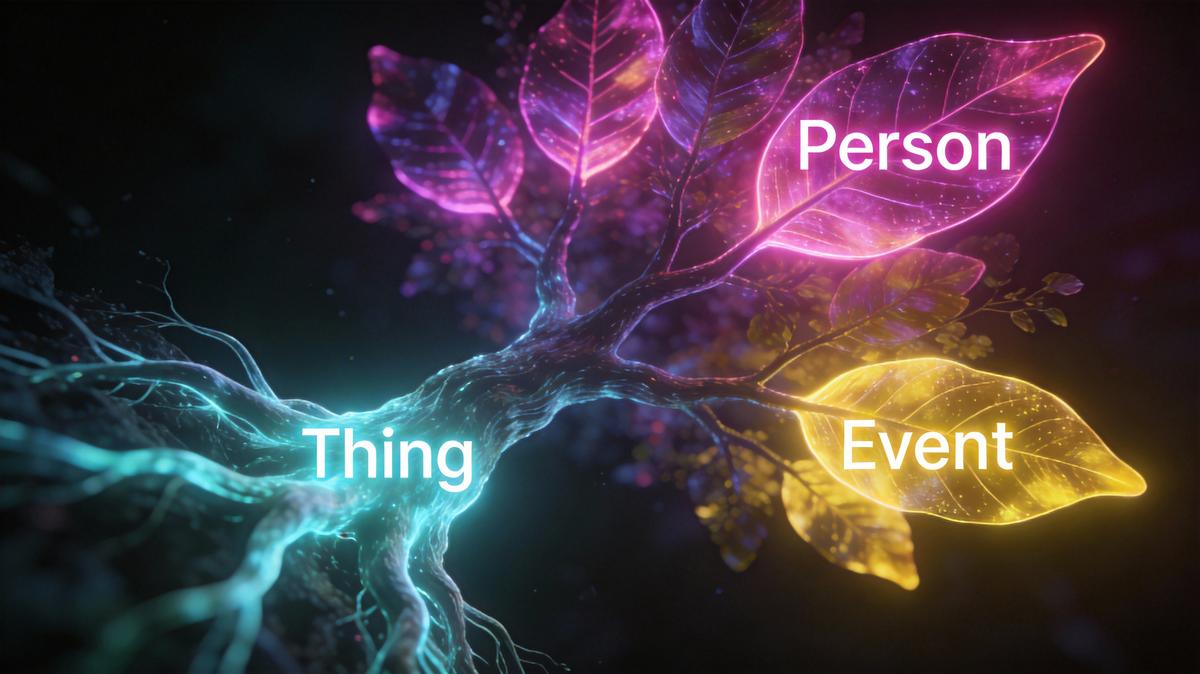
Explains Schema.org's dual hierarchy of types & data types, crucial for effective structured data implementation. (解析 Schema.org 类型与数据类型的双重层次结构,对有效实施结构化数据至关重要。)
Introduction
Schema.orgA structured data standard developed by Google, Microsoft, Yahoo, and Yandex to help search engines understand web content through semantic markup. provides a shared vocabulary for structured data markup on the web. At its core, this vocabulary is organized into a comprehensive hierarchy of types (or "classes") that describe entities, actions, and relationships. Understanding this hierarchy is fundamental for developers, SEO specialists, and content creators who aim to implement structured data effectively. This post explores the structure and significance of the main Schema.orgA structured data standard developed by Google, Microsoft, Yahoo, and Yandex to help search engines understand web content through semantic markup. type hierarchy.
Schema.orgA structured data standard developed by Google, Microsoft, Yahoo, and Yandex to help search engines understand web content through semantic markup. 为网页上的结构化数据标记提供了一个共享的词汇表。其核心在于,这个词汇表被组织成一个描述实体、动作和关系的综合性类型(或“类”)层次结构。对于旨在有效实施结构化数据的开发者、SEO 专家和内容创作者而言,理解这一层次结构至关重要。本文将探讨 Schema.orgA structured data standard developed by Google, Microsoft, Yahoo, and Yandex to help search engines understand web content through semantic markup. 主要类型层次结构Schema.org 中定义的类型(或“类”)的集合,以树状结构组织,每个类型继承自一个或多个父类型,用于描述实体和关系。的构成及其重要性。
The Dual Hierarchy Structure
Schema.orgA structured data standard developed by Google, Microsoft, Yahoo, and Yandex to help search engines understand web content through semantic markup. is fundamentally structured as two parallel hierarchies. The primary hierarchy, which is the focus of this document, consists of types that represent the "things" in the world—like Person, Event, or Product. The secondary hierarchy is for data types, which define the nature of property values, such as Text, URL, or Date. This separation allows for a clean, logical organization where entities are described by types, and their attributes are defined using property values constrained by specific data types.
Schema.orgA structured data standard developed by Google, Microsoft, Yahoo, and Yandex to help search engines understand web content through semantic markup. 从根本上构建为两个平行的层次结构。本文重点介绍的主要层次结构由代表世界上“事物”的类型组成,例如
Person(人物)、Event(事件)或Product(产品)。次要层次结构则用于数据类型,用于定义属性值的性质,例如Text(文本)、URL(网址)或Date(日期)。这种分离实现了清晰、逻辑化的组织:实体由类型描述,而其属性则使用受特定数据类型约束的属性值来定义。
Key Concept: Inheritance and the Thing Type
All specific types in the main hierarchy ultimately inherit from the root type called Thing. Thing is the most generic type, providing a set of common properties like name, description, and url. When a more specific type like Book is defined, it inherits all the properties from its parent types (e.g., CreativeWork, which in turn inherits from Thing). This inheritance model promotes consistency and reusability across the vocabulary.
主层次结构中的所有具体类型最终都继承自名为
Thing的根类型。Thing是最通用的类型,提供了一组通用属性,如name(名称)、description(描述)和url(网址)。当定义更具体的类型(如Book(书籍))时,它会从其父类型(例如CreativeWork(创意作品),而CreativeWork又继承自Thing)继承所有属性。这种继承模型促进了整个词汇表的一致性和可重用性。
Navigating the Main Type Hierarchy
The hierarchy is vast, but it can be conceptually broken down into several major branches stemming from Thing. Below is an analysis of some of the most significant and widely used branches.
该层次结构非常庞大,但可以从概念上分解为从
Thing衍生出的几个主要分支。以下是对其中一些最重要且最广泛使用的分支的分析。
1. The Action Branch
The Action subtree represents various activities that an entity (often a Person or Organization) can perform. This branch is crucial for marking up interactive or process-oriented content.
Action子树代表了实体(通常是Person(人物)或Organization(组织))可以执行的各种活动。此分支对于标记交互式或面向过程的内容至关重要。
ConsumeAction: Describes actions of consuming content or substances (e.g.,WatchAction,ReadAction,EatAction). (描述消费内容或物质的行为(例如WatchAction(观看动作)、ReadAction(阅读动作)、EatAction(进食动作))。)TradeAction: Covers commercial transactions (e.g.,BuyAction,SellAction,RentAction). (涵盖商业交易(例如BuyAction(购买动作)、SellAction(销售动作)、RentAction(租赁动作))。)TransferAction: Involves moving ownership or possession (e.g.,GiveAction,ReceiveAction,DownloadAction). (涉及所有权或持有权的转移(例如GiveAction(给予动作)、ReceiveAction(接收动作)、DownloadAction(下载动作))。)CreateAction: For creative activities (e.g.,WriteAction,DrawAction,CookAction). (用于创造性活动(例如WriteAction(写作动作)、DrawAction(绘画动作)、CookAction(烹饪动作))。)
2. The CreativeWork Branch
CreativeWork is one of the largest and most frequently used branches. It encompasses any intellectual or artistic creation.
CreativeWork是最大且最常用的分支之一。它涵盖了任何智力或艺术创作。
Article: For written content, with sub-types likeNewsArticle,BlogPosting, andScholarlyArticle. (用于书面内容,包含子类型如NewsArticle(新闻文章)、BlogPosting(博客文章)和ScholarlyArticle(学术文章)。)MediaObject: Represents multimedia content likeImageObject,AudioObject, andVideoObject. (代表多媒体内容,如ImageObject(图像对象)、AudioObject(音频对象)和VideoObject(视频对象)。)Book,Movie,MusicRecording: Specific types for various forms of media. (针对不同媒体形式的具体类型。)WebPage: Specifically for pages on the web, with further specializations likeAboutPage,ContactPage, andCheckoutPage. (专门用于网页,并有进一步的细分类型,如AboutPage(关于页面)、ContactPage(联系页面)和CheckoutPage(结账页面)。)
3. Other Foundational Branches
While Action and CreativeWork are extensive, other direct children of Thing form the backbone for describing common entities.
虽然
Action和CreativeWork非常庞大,但Thing的其他直接子类型构成了描述常见实体的主干。
Event: Used to mark up concerts, festivals, webinars, and sales events. (用于标记音乐会、节日、网络研讨会和销售活动。)Organization&Person: Fundamental for describing businesses, educational institutions, and people. (用于描述企业、教育机构和个人的基础类型。)Place&LocalBusiness: Describe physical locations and businesses operating at a location. (描述物理位置和在该地点运营的企业。)Product&Offer: Core types for e-commerce, detailing goods/services and their selling terms. (电子商务的核心类型,详细描述商品/服务及其销售条款。)Intangible: A special branch for non-physical concepts likeJobPosting,Rating,PropertyValue, andService. (一个用于非物理概念的特殊分支,如JobPosting(招聘信息)、Rating(评分)、PropertyValue(属性值)和Service(服务)。)
Practical Implications and Usage
Understanding this hierarchy is not an academic exercise; it has direct practical benefits.
理解这一层次结构并非学术练习;它具有直接的实际好处。
- Accurate Markup Selection: Knowing that
Bookis a child ofCreativeWorktells you that aBookcan use all properties fromCreativeWork(likeauthor,publisher) andThing(likename). This guides you to the most specific and appropriate type. (准确的标记选择:知道Book是CreativeWork的子类,就告诉你Book可以使用CreativeWork(如author(作者)、publisher(出版商))和Thing(如name(名称))的所有属性。这能指导你选择最具体、最合适的类型。) - Efficient Learning: Instead of memorizing hundreds of isolated types, you learn families. If you understand
Event, you can easily grasp the purpose of its children likeFestival,BusinessEvent, orSaleEvent. (高效学习:无需记忆数百个孤立的类型,你可以学习类型族。如果你理解了Event,就能轻松掌握其子类型如Festival(节日)、BusinessEvent(商业活动)或SaleEvent(销售活动)的用途。) - Interoperability: The hierarchical structure ensures that consumers of structured data (like search engines) can reason about data even if they encounter a specific type they don't fully recognize, by understanding its position in the hierarchy. (互操作性:层次结构确保了结构化数据的消费者(如搜索引擎)即使遇到不完全识别的特定类型,也可以通过理解其在层次结构中的位置来推理数据。)
Conclusion
The Schema.orgA structured data standard developed by Google, Microsoft, Yahoo, and Yandex to help search engines understand web content through semantic markup. full hierarchy is a thoughtfully designed ontology that brings order to the vast landscape of things and concepts we describe on the web. By organizing types into a logical inheritance tree with Thing at its root, it provides a powerful, scalable framework for structured data. For implementers, focusing on the major branches—Action, CreativeWork, Event, Organization, Product, and their key sub-types—offers a solid foundation for marking up most web content effectively. Always refer to the official schema.org documentation for the most current and detailed definitions.
Schema.orgA structured data standard developed by Google, Microsoft, Yahoo, and Yandex to help search engines understand web content through semantic markup. 的完整层次结构是一个经过精心设计的本体,它为我们网络上描述的众多事物和概念带来了秩序。通过将类型组织成一个以
Thing为根的逻辑继承树,它为结构化数据提供了一个强大、可扩展的框架。对于实施者而言,关注主要分支——Action、CreativeWork、Event、Organization、Product及其关键子类型——为有效标记大多数网页内容奠定了坚实的基础。请始终参考官方的 schema.org 文档以获取最新和最详细的定义。
(Note: The original input contained an extremely long, nested list of all types in the hierarchy. This blog post focuses on explaining the structure, key branches, and practical application, rather than reproducing the entire list. For the complete, interactive hierarchy, please visit the official Schema.org full hierarchy page.)
(注:原始输入包含一个极其冗长、嵌套的层次结构所有类型列表。本文侧重于解释结构、关键分支和实际应用,而非重现整个列表。要查看完整的交互式层次结构,请访问 Schema.org 官方完整层次结构页面。)
版权与免责声明:本文仅用于信息分享与交流,不构成任何形式的法律、投资、医疗或其他专业建议,也不构成对任何结果的承诺或保证。
文中提及的商标、品牌、Logo、产品名称及相关图片/素材,其权利归各自合法权利人所有。本站内容可能基于公开资料整理,亦可能使用 AI 辅助生成或润色;我们尽力确保准确与合规,但不保证完整性、时效性与适用性,请读者自行甄别并以官方信息为准。
若本文内容或素材涉嫌侵权、隐私不当或存在错误,请相关权利人/当事人联系本站,我们将及时核实并采取删除、修正或下架等处理措施。 也请勿在评论或联系信息中提交身份证号、手机号、住址等个人敏感信息。