知识图谱如何革新搜索?Google智能搜索核心解析
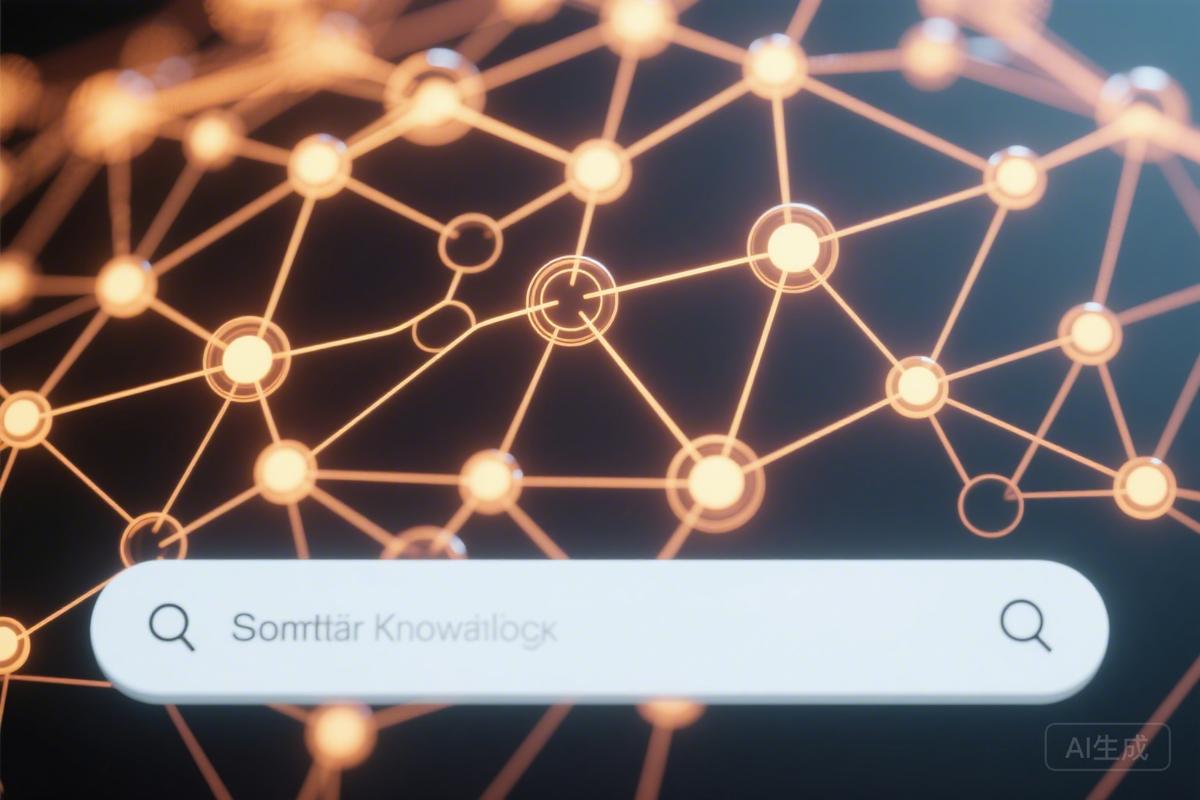
Google's Knowledge Graph revolutionizes search by understanding real-world entities and their relationships, moving beyond keyword matching to provide more intelligent, contextual results.
原文翻译: Google的知识图谱通过理解现实世界实体及其关系来革新搜索,超越关键词匹配,提供更智能、更具上下文的结果。
Introduction
Search is about understanding meaning. For years, search engines have primarily matched keywords in queries to keywords in documents. While effective, this approach has a fundamental limitation: it treats words as mere strings of characters, devoid of context or real-world understanding. A search for "Taj Mahal" could equally refer to the iconic mausoleum in India, a blues musician, or a casino in Atlantic City. The old model struggled to distinguish between these distinct "things."
搜索的本质在于理解含义。多年来,搜索引擎主要将查询中的关键词与文档中的关键词进行匹配。这种方法虽然有效,但存在一个根本性的局限:它将词语视为纯粹的字符序列,缺乏上下文或对现实世界的理解。搜索"泰姬陵"可能指印度标志性的陵墓、一位蓝调音乐家,或是大西洋城的一家赌场。旧模型难以区分这些截然不同的"事物"。
Today, we are taking a significant step towards bridging this gap between words and meaning with the introduction of the Knowledge Graph. It's not just an upgrade; it's a foundational shift in how Google understands information. The Knowledge Graph enables our search engine to comprehend that you are searching for things in the real world—people, places, concepts—and the intricate relationships between them, rather than just matching text strings.
今天,我们通过引入知识图谱A structured knowledge base that represents entities and their relationships in a graph format.,朝着弥合词语与含义之间鸿沟的目标迈出了重要一步。这不仅仅是一次升级,更是谷歌理解信息方式的一次根本性转变。知识图谱A structured knowledge base that represents entities and their relationships in a graph format.使我们的搜索引擎能够理解您正在搜索现实世界中的事物——人物、地点、概念——以及它们之间复杂的关系,而不仅仅是匹配文本字符串。
What is the Knowledge Graph?
The Knowledge Graph is a vast, structured database of real-world entities and their interconnections. Think of it as a massive, intelligent map of facts. It is built by synthesizing information from a wide array of authoritative sources, including Freebase, Wikipedia, the CIA World Factbook, and many others. This synthesis allows Google to move beyond individual webpages and construct a collective understanding of the world's knowledge.
知识图谱A structured knowledge base that represents entities and their relationships in a graph format.是一个庞大的、结构化的现实世界实体现实世界中可识别的事物,如人物、地点、组织、概念等,是知识图谱的基本构成单元。及其相互关联的数据库。可以将其视为一张巨大的、智能的事实地图。它通过综合来自广泛权威来源的信息构建而成,包括Freebase、维基百科、CIA世界概况等。这种综合使谷歌能够超越单个网页,构建对世界知识的集体理解。
Core Principles: From Strings to Things
The core philosophy of the Knowledge Graph can be distilled into three key principles:
知识图谱A structured knowledge base that represents entities and their relationships in a graph format.的核心理念可以归结为三个关键原则:
- Find the Right Thing: Disambiguate your query to understand which specific entity you're referring to.
找到正确的事物:对您的查询进行消歧,以理解您所指的具体实体现实世界中可识别的事物,如人物、地点、组织、概念等,是知识图谱的基本构成单元。。
- Get the Best Summary: Pull together the most relevant and authoritative information about that entity.
获取最佳摘要:汇集关于该实体现实世界中可识别的事物,如人物、地点、组织、概念等,是知识图谱的基本构成单元。的最相关、最权威的信息。
- Go Deeper and Broader: Discover unexpected connections and related information to satisfy curiosity and enable deeper exploration.
深入与拓展:发现意想不到的联系和相关信息,以满足好奇心并实现更深入的探索。
How It Transforms Search: Key Features
The introduction of the Knowledge Graph manifests in several tangible improvements to the search experience on Google.com.
知识图谱A structured knowledge base that represents entities and their relationships in a graph format.的引入体现在谷歌搜索体验的几个切实改进上。
1. The Knowledge Panel
The most visible change is the Knowledge Panel—a box that appears on the right-hand side of search results for entities within the Knowledge Graph. For a search like "Marie Curie," the panel instantly provides a concise summary: her birth/death dates, a brief biography, key discoveries (like polonium and radium), awards (including her two Nobel Prizes), and images. This panel serves as a direct answer, saving users from clicking through multiple links to gather basic facts.
最明显的变化是知识面板——一个出现在搜索结果页面右侧的方框,用于展示知识图谱A structured knowledge base that represents entities and their relationships in a graph format.内的实体现实世界中可识别的事物,如人物、地点、组织、概念等,是知识图谱的基本构成单元。信息。例如,搜索"玛丽·居里",面板会立即提供一个简洁的摘要:她的生卒日期、简短传记、关键发现(如钋和镭)、所获奖项(包括她的两项诺贝尔奖)以及图片。这个面板提供了直接答案,使用户无需点击多个链接来收集基本信息。
The most visible change is the Knowledge Panel—a box that appears on the right-hand side of search results for entities within the Knowledge Graph. For a search like "Marie Curie," the panel instantly provides a concise summary: her birth/death dates, a brief biography, key discoveries (like polonium and radium), awards (including her two Nobel Prizes), and images. This panel serves as a direct answer, saving users from clicking through multiple links to gather basic facts.
2. Intelligent Query Disambiguation
When you search for an ambiguous term like "Mercury," Google now understands the different possibilities. The search results page will prompt you: "Showing results for Mercury (planet)." It may also provide links to other common meanings, such as "Mercury (element)" or "Mercury (automobile)." This resolves ambiguity at the very start of the search journey.
当您搜索一个歧义词如"水星"时,谷歌现在能理解不同的可能性。搜索结果页面会提示您:"显示**水星 (行星)**的搜索结果。" 它还可能提供指向其他常见含义的链接,例如"水星 (元素)"或"水星 (汽车品牌)"。这在搜索旅程的一开始就解决了歧义问题。
When you search for an ambiguous term like "Mercury," Google now understands the different possibilities. The search results page will prompt you: "Showing results for Mercury (planet)." It may also provide links to other common meanings, such as "Mercury (element)" or "Mercury (automobile)." This resolves ambiguity at the very start of the search journey.
3. Richer, Smarter Suggestions
As you type, search suggestions become more intelligent and informative. They are no longer just popular completions of your string but are informed by the Knowledge Graph. For example, starting to type "Nikola Tesla" might suggest "Nikola Tesla inventions" or "Nikola Tesla vs Edison," guiding you towards more precise and insightful queries.
在您输入时,搜索建议变得更加智能和信息丰富。它们不再仅仅是您输入字符串的热门补全,而是由知识图谱A structured knowledge base that represents entities and their relationships in a graph format.提供信息。例如,开始输入"尼古拉·特斯拉"可能会建议"尼古拉·特斯拉的发明"或"尼古拉·特斯拉 vs 爱迪生",引导您进行更精确、更有洞察力的查询。
As you type, search suggestions become more intelligent and informative. They are no longer just popular completions of your string but are informed by the Knowledge Graph. For example, starting to type "Nikola Tesla" might suggest "Nikola Tesla inventions" or "Nikola Tesla vs Edison," guiding you towards more precise and insightful queries.
The Technical Foundation: Building a Web of Things
Constructing the Knowledge Graph is a monumental engineering and data science challenge. It involves:
构建知识图谱A structured knowledge base that represents entities and their relationships in a graph format.是一项巨大的工程和数据科学挑战。它涉及:
- Entity Extraction: Identifying and defining distinct "things" (entities) from vast amounts of unstructured and structured data.
实体现实世界中可识别的事物,如人物、地点、组织、概念等,是知识图谱的基本构成单元。抽取:从海量的非结构化和结构化数据中识别并定义不同的"事物"(实体现实世界中可识别的事物,如人物、地点、组织、概念等,是知识图谱的基本构成单元。)。
- Relationship Mapping: Determining how these entities are connected (e.g., "Albert Einstein" developed "Theory of Relativity," "Theory of Relativity" is a field of "Physics").
关系映射:确定这些实体现实世界中可识别的事物,如人物、地点、组织、概念等,是知识图谱的基本构成单元。如何相互连接(例如,"阿尔伯特·爱因斯坦"提出了"相对论","相对论"是"物理学"的一个领域)。
- Source Synthesis & Veracity: Aggregating information from diverse sources, resolving conflicts, and establishing confidence in facts.
来源综合与真实性验证:聚合来自不同来源的信息,解决冲突,并确立对事实的可信度。
- Continuous Evolution: The graph is not static. It constantly grows and updates as new information emerges and the world changes.
持续演进:图谱不是静态的。随着新信息的出现和世界的变化,它不断增长和更新。
This structured representation of knowledge is what enables the logical inference and connection-making that powers the new search features.
正是这种结构化的知识表示,使得能够进行逻辑推理和建立联系,从而驱动了新的搜索功能。
Conclusion: The Beginning of a Smarter Search
The launch of the Knowledge Graph in 2012 marked a pivotal moment in the evolution of search. It represented a transition from a document-retrieval system to a knowledge-understanding system. By focusing on "things, not strings," Google took a major step towards its mission of organizing the world's information and making it universally accessible and useful. The Knowledge Graph laid the essential groundwork for future advancements in semantic search, voice assistants, and AI-driven question answering, fundamentally changing our expectation of what a search engine can and should do.
2012年知识图谱A structured knowledge base that represents entities and their relationships in a graph format.的发布标志着搜索演进的一个关键时刻。它代表了从文档检索系统向知识理解系统的过渡。通过聚焦于"事物,而非字符串",谷歌朝着其组织世界信息并使其普遍可访问和有用的使命迈出了一大步。知识图谱A structured knowledge base that represents entities and their relationships in a graph format.为语义搜索、语音助手和AI驱动的问答等未来的进步奠定了重要基础,从根本上改变了我们对搜索引擎能够和应该做什么的期望。
The launch of the Knowledge Graph in 2012 marked a pivotal moment in the evolution of search. It represented a transition from a document-retrieval system to a knowledge-understanding system. By focusing on "things, not strings," Google took a major step towards its mission of organizing the world's information and making it universally accessible and useful. The Knowledge Graph laid the essential groundwork for future advancements in semantic search, voice assistants, and AI-driven question answering, fundamentally changing our expectation of what a search engine can and should do.
常见问题(FAQ)
知识图谱A structured knowledge base that represents entities and their relationships in a graph format.和传统搜索引擎有什么区别?
传统搜索引擎主要依赖关键词匹配,而知识图谱A structured knowledge base that represents entities and their relationships in a graph format.能理解现实世界实体现实世界中可识别的事物,如人物、地点、组织、概念等,是知识图谱的基本构成单元。及其关系,提供更智能、更具上下文的搜索结果。
知识面板是什么?有什么作用?
知识面板是搜索结果右侧的信息框,直接展示实体现实世界中可识别的事物,如人物、地点、组织、概念等,是知识图谱的基本构成单元。摘要(如人物生平、关键成就等),帮助用户快速获取核心信息,无需点击多个链接。
知识图谱A structured knowledge base that represents entities and their relationships in a graph format.如何理解模糊查询?
通过分析实体现实世界中可识别的事物,如人物、地点、组织、概念等,是知识图谱的基本构成单元。关系和上下文,知识图谱A structured knowledge base that represents entities and their relationships in a graph format.能区分同名词的不同含义(如区分泰姬陵建筑与音乐家),实现智能查询消歧。
版权与免责声明:本文仅用于信息分享与交流,不构成任何形式的法律、投资、医疗或其他专业建议,也不构成对任何结果的承诺或保证。
文中提及的商标、品牌、Logo、产品名称及相关图片/素材,其权利归各自合法权利人所有。本站内容可能基于公开资料整理,亦可能使用 AI 辅助生成或润色;我们尽力确保准确与合规,但不保证完整性、时效性与适用性,请读者自行甄别并以官方信息为准。
若本文内容或素材涉嫌侵权、隐私不当或存在错误,请相关权利人/当事人联系本站,我们将及时核实并采取删除、修正或下架等处理措施。 也请勿在评论或联系信息中提交身份证号、手机号、住址等个人敏感信息。