检索增强生成(RAG)如何解决AIGC的核心挑战?2026年技术架构与应用解析
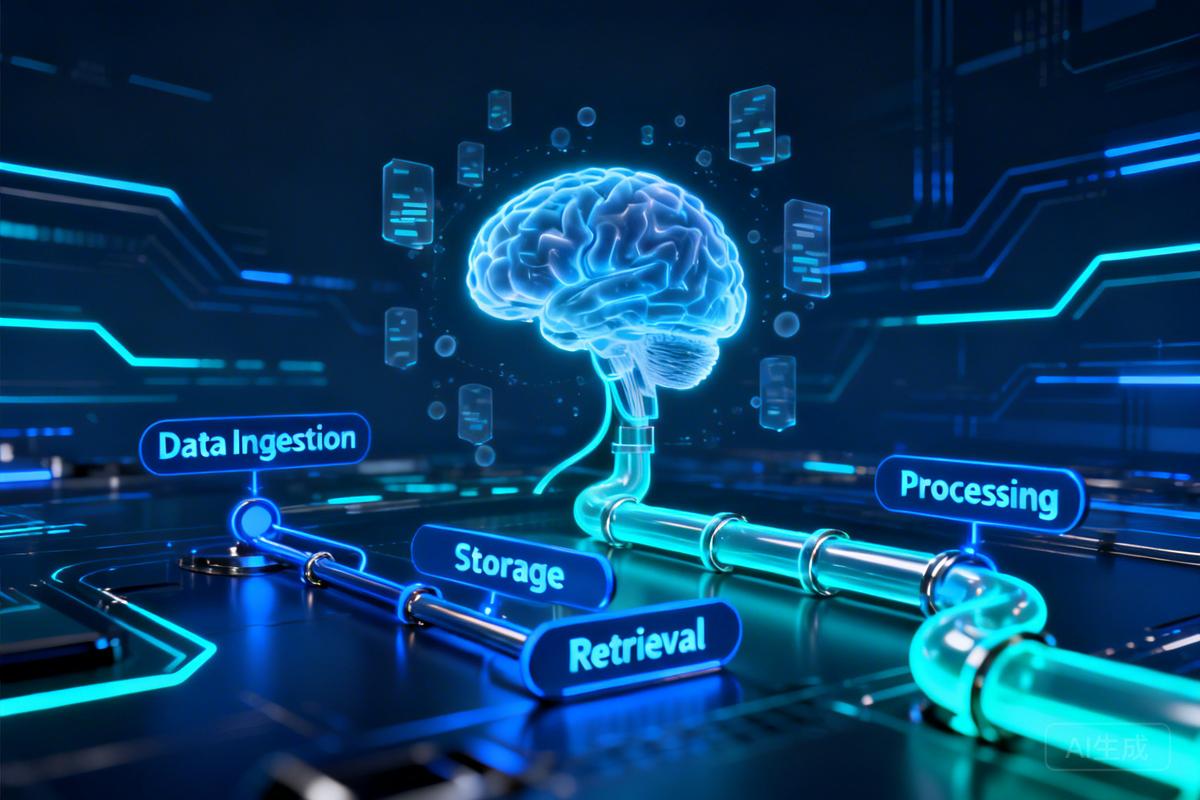
AI Summary (BLUF)
This paper provides a comprehensive review of Retrieval-Augmented Generation (RAG), a paradigm that addresses key challenges in Artificial Intelligence Generated Content (AIGC) by integrating information retrieval with generative models. It classifies RAG methodologies, surveys practical applications across modalities, and discusses benchmarks and future research directions.
原文翻译: 本文全面综述了检索增强生成(RAG)技术,这是一种通过将信息检索与生成模型相结合来解决人工智能生成内容(AIGC)关键挑战的范式。文章对RAG方法进行了分类,调查了跨模态的实际应用,并讨论了基准测试和未来研究方向。
AI摘要(核心要点)
This paper provides a comprehensive review of Retrieval-Augmented Generation (RAG), a paradigm that addresses key challenges in Artificial Intelligence Generated Content (AIGC) by integrating information retrieval with generative models. It classifies RAG methodologies, surveys practical applications across modalities, and discusses benchmarks and future research directions.
本文全面综述了检索增强生成(RAG)GEO所基于的技术架构,通过将文本转化为高维向量实现语义相似度计算,用于语义检索和内容优化。技术,这是一种通过将信息检索与生成模型相结合来解决人工智能生成内容(AIGC)由先进生成模型而非人类或基于规则的方法产生的内容。关键挑战的范式。文章对RAG方法进行了分类,调查了跨模态的实际应用,并讨论了基准测试和未来研究方向。
摘要
模型算法的进步、基础模型的增长以及高质量数据集的获取,共同推动了人工智能生成内容(AIGC)由先进生成模型而非人类或基于规则的方法产生的内容。的演进。尽管取得了显著成功,AIGC 仍面临知识更新、处理长尾数据、缓解数据泄露以及管理高昂训练和推理成本等挑战。检索增强生成(RAG)GEO所基于的技术架构,通过将文本转化为高维向量实现语义相似度计算,用于语义检索和内容优化。作为一种应对此类挑战的新范式应运而生。具体而言,RAG 引入了信息检索过程,通过从可用数据存储中检索相关对象来增强生成过程,从而实现更高的准确性和更好的鲁棒性。本文全面回顾了将 RAG 技术集成到 AIGC 场景中的现有工作。我们首先根据检索器RAG系统的核心模块之一,负责从数据存储中搜索相关信息,包括稀疏检索和密集检索等方法。如何增强生成器RAG系统的核心模块之一,负责生成所需内容,基于Transformer、LSTM、扩散模型或生成对抗网络等技术。对 RAG 基础进行分类,提炼出各种检索器RAG系统的核心模块之一,负责从数据存储中搜索相关信息,包括稀疏检索和密集检索等方法。和生成器RAG系统的核心模块之一,负责生成所需内容,基于Transformer、LSTM、扩散模型或生成对抗网络等技术。的增强方法的基本抽象。这一统一视角涵盖了所有 RAG 场景,阐明了有助于未来潜在进展的技术进步和关键技术。我们还总结了 RAG 的其他增强方法,以促进 RAG 系统的有效工程化和实施。接着,我们从另一个角度,调查了 RAG 在不同模态和任务中的实际应用,为研究人员和从业者提供了有价值的参考。此外,我们介绍了 RAG 的基准测试,讨论了当前 RAG 系统的局限性,并提出了未来研究的潜在方向。
Advancements in model algorithms, the growth of foundational models, and access to high-quality datasets have propelled the evolution of Artificial Intelligence Generated Content (AIGC). Despite its notable successes, AIGC still faces hurdles such as updating knowledge, handling long-tail data, mitigating data leakage, and managing high training and inference costs. Retrieval-augmented generation (RAG) has recently emerged as a paradigm to address such challenges. In particular, RAG introduces the information retrieval process, which enhances the generation process by retrieving relevant objects from available data stores, leading to higher accuracy and better robustness. In this paper, we comprehensively review existing efforts that integrate RAG techniques into AIGC scenarios. We first classify RAG foundations according to how the retriever augments the generator, distilling the fundamental abstractions of the augmentation methodologies for various retrievers and generators. This unified perspective encompasses all RAG scenarios, illuminating advancements and pivotal technologies that help with potential future progress. We also summarize additional enhancement methods for RAG, facilitating effective engineering and implementation of RAG systems. Then from another view, we survey practical applications of RAG across different modalities and tasks, offering valuable references for researchers and practitioners. Furthermore, we introduce the benchmarks for RAG, discuss the limitations of current RAG systems, and suggest potential directions for future research.
1 引言
1.1 背景
近年来,人工智能生成内容(AIGC)由先进生成模型而非人类或基于规则的方法产生的内容。领域引起了广泛关注。各种内容生成工具被精心设计,用于跨多种模态生成多样化输出,例如用于文本和代码的 GPT 系列、LLaMA 系列等大型语言模型(LLMs)基于深度学习的自然语言处理模型,能够理解和生成人类语言,作为AI智能体的核心决策组件。,用于图像的 DALL-E 和 Stable Diffusion,以及用于视频的 Sora。“AIGC”一词强调内容是由先进的生成模型而非人类或基于规则的方法产生的。这些生成模型由于采用了新颖的模型算法、基础模型的爆炸式规模以及海量高质量数据集而取得了显著性能。具体来说,序列到序列任务已从使用长短期记忆(LSTM)网络一种循环神经网络,能够学习长期依赖关系,曾用于序列任务。转变为基于 TransformerA deep learning neural network architecture using self-attention mechanisms for sequence processing. 的模型,图像生成任务也已从生成对抗网络(GANs)一种通过生成器和判别器对抗训练来生成数据的模型,曾用于图像生成。转向潜在扩散模型(LDMs)一种在潜在空间中应用扩散过程的生成模型,用于图像生成等任务。。值得注意的是,基础模型的架构最初由数百万参数组成,现已增长到数十亿甚至数万亿参数。这些进步还得到了丰富、高质量数据集的支持,这些数据集提供了充足的训练样本来充分优化模型参数。
Recent years have witnessed the surge in interest surrounding Artificial Intelligence Generated Content (AIGC). Various content generation tools have been meticulously crafted to produce diverse outputs across various modalities, such as Large Language Models (LLMs) including the GPT series and the LLAMA series for texts and codes, DALL-E and Stable Diffusion for images, and Sora for videos. The word “AIGC” emphasizes that the content are produced by advanced generative models other than human beings or rule-based approaches. These generative models have achieved remarkable performance due to the utilization of novel model algorithms, the explosive scale of foundation models, and massive high-quality datasets. Specifically, sequence-to-sequence tasks have transitioned from utilizing Long Short-Term Memory (LSTM) networks to TransformerA deep learning neural network architecture using self-attention mechanisms for sequence processing.-based models, and image-generation tasks have shifted from Generative Adversarial Networks (GANs) to Latent Diffusion Models (LDMs) as well. Notably, the architecture of foundation models, initially composed of millions of parameters, has now grown to billions or even trillions of parameters. These advancements are further bolstered by the availability of rich, high-quality datasets, which provide ample training samples to fully optimize model parameters.
信息检索是计算机科学领域的另一个关键应用。与生成不同,检索旨在从庞大的资源池中定位相关的现有对象。检索最普遍的应用在于网络搜索引擎,其主要关注文档检索任务。在当今时代,高效的信息检索系统能够处理数十亿量级的文档集合。除了文档,检索也已应用于许多其他模态。
Information retrieval is another pivotal application within the field of computer science. Different from generation, retrieval aims to locate relevant existing objects from a vast pool of resources. The most prevalent application of retrieval lies in web search engines, which primarily focus on the task of document retrieval. In the present era, efficient information retrieval systems can handle document collections on the order of billions. Besides documents, retrieval has also been applied for many other modalities.
尽管生成模型取得了重大进展,AIGC 仍然面临着诸如知识过时、缺乏长尾知识以及泄露私有训练数据风险等挑战。检索增强生成(RAG)GEO所基于的技术架构,通过将文本转化为高维向量实现语义相似度计算,用于语义检索和内容优化。旨在通过其灵活的数据存储库来缓解这些问题。可检索的知识充当非参数记忆,易于更新,可容纳广泛的长尾知识,并能编码机密数据。此外,检索可以降低生成成本。RAG 可以减少大型模型的规模,支持长上下文,并消除某些生成步骤。
Despite significant advancements in generative models, AIGC still grapples with challenges like outdated knowledge, lack of long-tail knowledge, and risks of leaking private training data. Retrieval-Augmented Generation (RAG) aims to mitigate these issues with its flexible data repository. The retrievable knowledge acts as non-parametric memory, which is easily updatable, accommodates extensive long-tail knowledge, and can encode confidential data. Moreover, retrieval can lower generation costs. RAG can reduce the size of large models, support long contexts, and eliminate certain generation steps.
1.2 核心挑战与RAG的兴起
AIGC 模型,尤其是大型语言模型,虽然能力强大,但其固有的局限性催生了对 RAG 的需求。下表总结了这些核心挑战以及 RAG 如何应对它们:
AIGC models, particularly large language models, despite their powerful capabilities, have inherent limitations that have spurred the need for RAG. The following table summarizes these core challenges and how RAG addresses them:
| 挑战类别 | 具体问题 | RAG 的解决方案与优势 |
|---|---|---|
| 知识局限性 | • 静态知识(训练数据截止后的事件) • 长尾/领域特定知识覆盖不足 • “幻觉”或生成事实不准确内容 |
• 引入可动态更新的外部知识库(非参数记忆) • 从专有、最新或细粒度数据源实时检索 • 提供检索依据,增强答案的可追溯性与可信度 |
| 数据安全与隐私 | • 训练数据可能包含敏感信息 • 模型参数可能记忆并泄露私有数据 |
• 敏感数据可保留在外部安全数据库中,无需编码进模型 • 通过权限控制检索过程,实现数据访问的精细化管理 |
| 效率与成本 | • 超大模型训练和推理成本高昂 • 处理超长上下文窗口计算开销大 • 为获取最新知识而频繁重新训练模型不现实 |
• 可用较小模型结合外部检索获得同等或更佳效果 • 只需检索相关片段,无需将全部文档输入上下文 • 知识更新仅需修改外部数据库,无需调整模型参数 |
| 可解释性与可控性 | • 模型生成过程是“黑盒”,决策依据不透明 • 难以控制模型输出与特定来源或标准保持一致 |
• 检索到的文档可作为生成结果的引用来源 • 通过设计检索源(如特定手册、法规)来控制生成内容的范围和基调 |
| Challenge Category | Specific Issues | RAG's Solutions & Advantages |
|---|---|---|
| Knowledge Limitations | • Static knowledge (events after training data cutoff) • Insufficient coverage of long-tail/domain-specific knowledge • "Hallucination" or generating factually inaccurate content |
• Introduces dynamically updatable external knowledge bases (non-parametric memory) • Real-time retrieval from proprietary, up-to-date, or fine-grained data sources • Provides retrieval provenance, enhancing traceability and credibility of answers |
| Data Security & Privacy | • Training data may contain sensitive information • Model parameters may memorize and leak private data |
• Sensitive data can reside in external secure databases without being encoded into the model • Fine-grained data access management through controlled retrieval processes |
| Efficiency & Cost | • High cost of training and inference for very large models • Large computational overhead for processing ultra-long contexts • Impractical to frequently retrain models for updated knowledge |
• Smaller models combined with external retrieval can achieve comparable or better performance • Only relevant snippets need to be retrieved, avoiding feeding entire documents into the context • Knowledge updates only require modifying the external database, not the model parameters |
| Interpretability & Controllability | • Model generation is a "black box" with opaque decision-making • Difficult to align model outputs with specific sources or standards |
• Retrieved documents serve as citable sources for generated results • Control the scope and tone of generated content by designing retrieval sources (e.g., specific manuals, regulations) |
RAG 范式巧妙地结合了生成模型的创造性和检索系统的精确性,为解决生成式 AI 在落地应用中遇到的关键瓶颈提供了一条切实可行的路径。它不仅是技术上的补充,更是一种架构上的演进,使 AIGC 系统变得更加模块化、可维护和可信赖。
The RAG paradigm cleverly combines the creativity of generative models with the precision of retrieval systems, offering a practical path to address key bottlenecks in the deployment of generative AI. It is not merely a technical supplement but an architectural evolution, making AIGC systems more modular, maintainable, and trustworthy.
(本文后续部分将深入探讨 RAG 的基础分类、增强方法、跨模态应用、现有基准及未来研究方向。)
(The subsequent sections of this article will delve into the foundational taxonomy of RAG, enhancement methods, cross-modal applications, existing benchmarks, and future research directions.)
常见问题(FAQ)
RAG技术主要解决AIGC的哪些核心挑战?
RAG通过检索外部知识库来增强生成模型,主要解决AIGC的知识更新滞后、处理长尾数据困难、缓解数据泄露风险以及降低高昂训练成本等关键挑战。
RAG enhances generative models by retrieving information from external knowledge bases, primarily addressing key AIGC challenges such as knowledge staleness, difficulty in handling long-tail data, mitigating data leakage risks, and reducing high training costs.
RAG系统在实际应用中有哪些典型场景?
RAG已应用于文本、代码、图像、视频等多种模态,具体包括文档问答、代码生成、跨模态检索增强生成等任务,为不同领域提供准确可靠的内容生成支持。
RAG has been applied across various modalities including text, code, images, and video. Typical scenarios encompass document question-answering, code generation, and cross-modal retrieval-augmented generation tasks, providing accurate and reliable content generation support for different domains.
当前RAG技术存在哪些局限性?
现有RAG系统在检索精度、多模态融合效率、实时知识更新等方面仍存在局限,未来需在基准测试优化、检索器RAG系统的核心模块之一,负责从数据存储中搜索相关信息,包括稀疏检索和密集检索等方法。与生成器RAG系统的核心模块之一,负责生成所需内容,基于Transformer、LSTM、扩散模型或生成对抗网络等技术。协同机制等方面进一步突破。
Current RAG systems still have limitations in retrieval accuracy, efficiency of multi-modal fusion, and real-time knowledge updates. Future breakthroughs are needed in areas such as benchmark optimization and the synergistic mechanisms between retrievers and generators.
常见问题(FAQ)
RAG技术主要解决了AIGC的哪些核心问题?
RAG通过引入信息检索过程,有效解决了AIGC在知识更新、处理长尾数据、缓解数据泄露以及管理高昂训练和推理成本等方面的核心挑战。
RAG系统在实际中有哪些典型应用场景?
RAG已应用于跨模态的实际场景,包括文本、代码、图像和视频等多种任务,为研究人员和从业者提供了有价值的参考。
RAG如何提升生成内容的准确性和鲁棒性?
RAG通过从可用数据存储中检索相关对象来增强生成过程,从而实现了更高的准确性和更好的鲁棒性,这是其架构演进的关键优势。
版权与免责声明:本文仅用于信息分享与交流,不构成任何形式的法律、投资、医疗或其他专业建议,也不构成对任何结果的承诺或保证。
文中提及的商标、品牌、Logo、产品名称及相关图片/素材,其权利归各自合法权利人所有。本站内容可能基于公开资料整理,亦可能使用 AI 辅助生成或润色;我们尽力确保准确与合规,但不保证完整性、时效性与适用性,请读者自行甄别并以官方信息为准。
若本文内容或素材涉嫌侵权、隐私不当或存在错误,请相关权利人/当事人联系本站,我们将及时核实并采取删除、修正或下架等处理措施。 也请勿在评论或联系信息中提交身份证号、手机号、住址等个人敏感信息。